Facebook Ads Budget Planning Guide
AI-Powered Facebook Advertising: Complete Guide
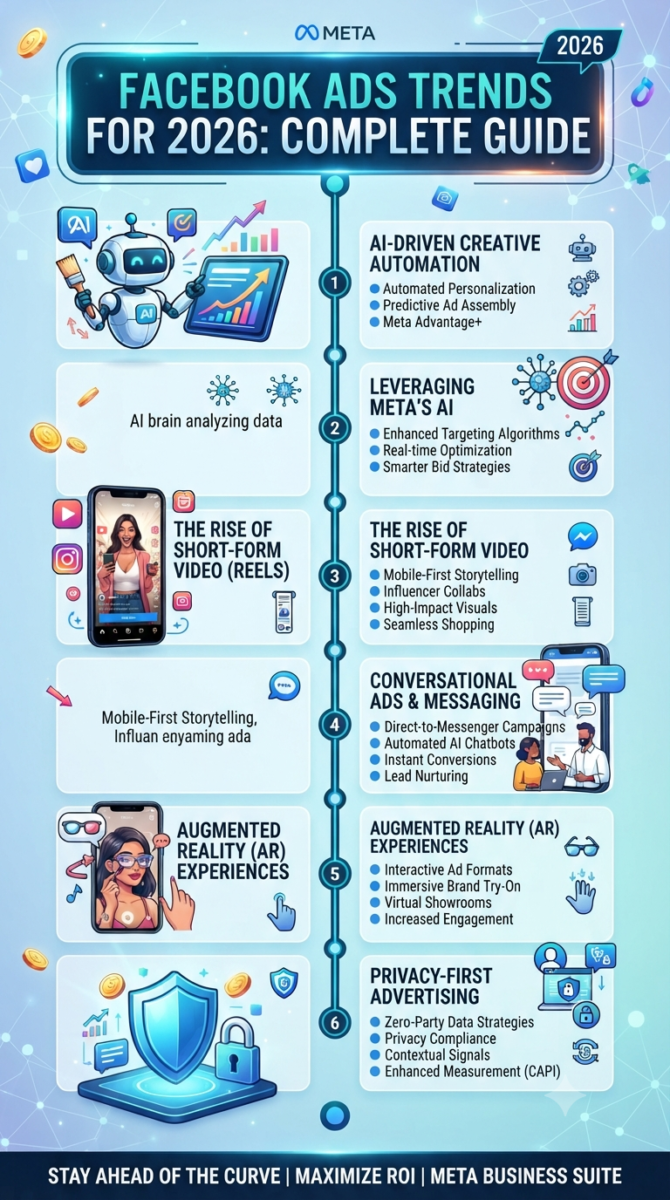
Facebook Ads Trends for 2026 are transforming the way businesses connect with customers, generate leads, and increase sales. Artificial intelligence has become smarter, audience targeting is more precise, and campaign automation is making advertising easier than ever before. Businesses that continue using outdated Facebook advertising strategies will struggle to compete, while those who embrace modern techniques can significantly improve their return on investment.
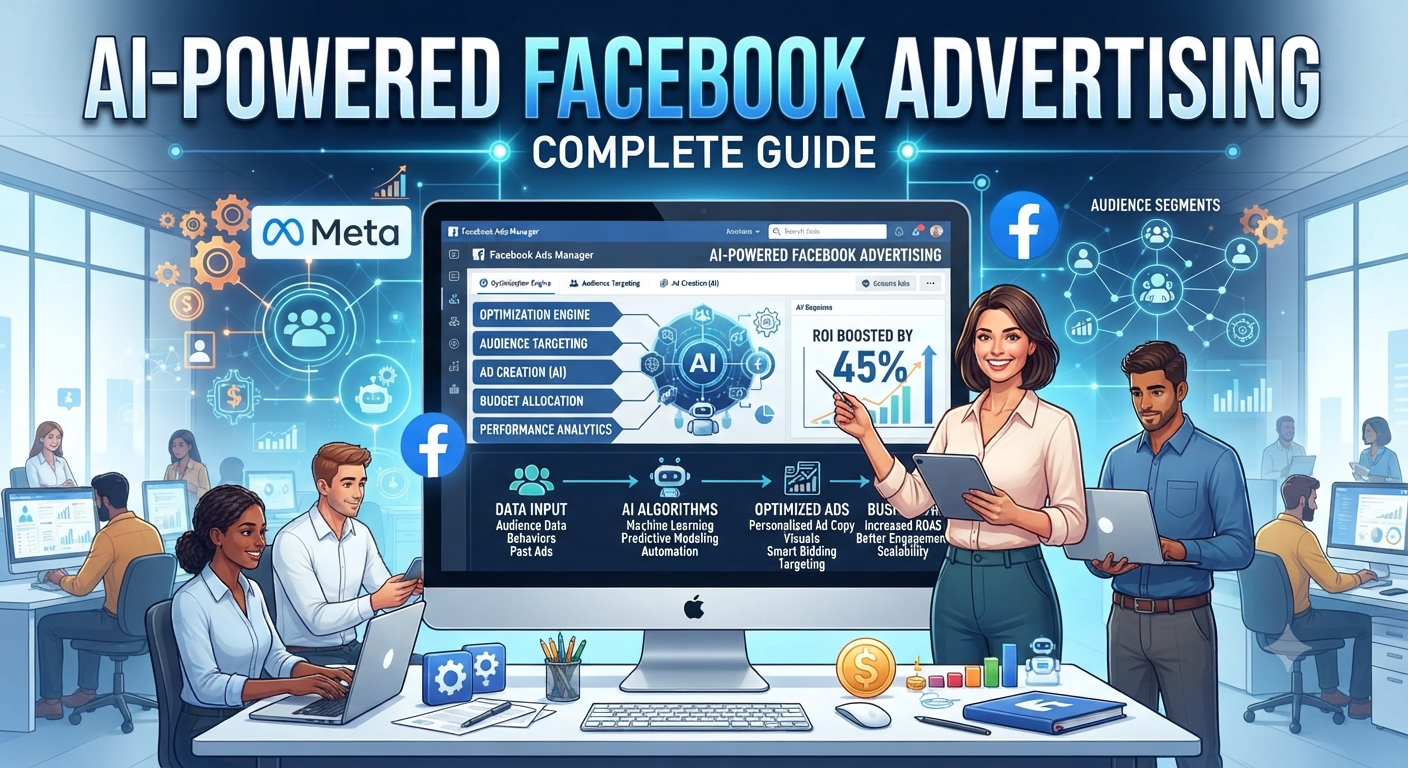
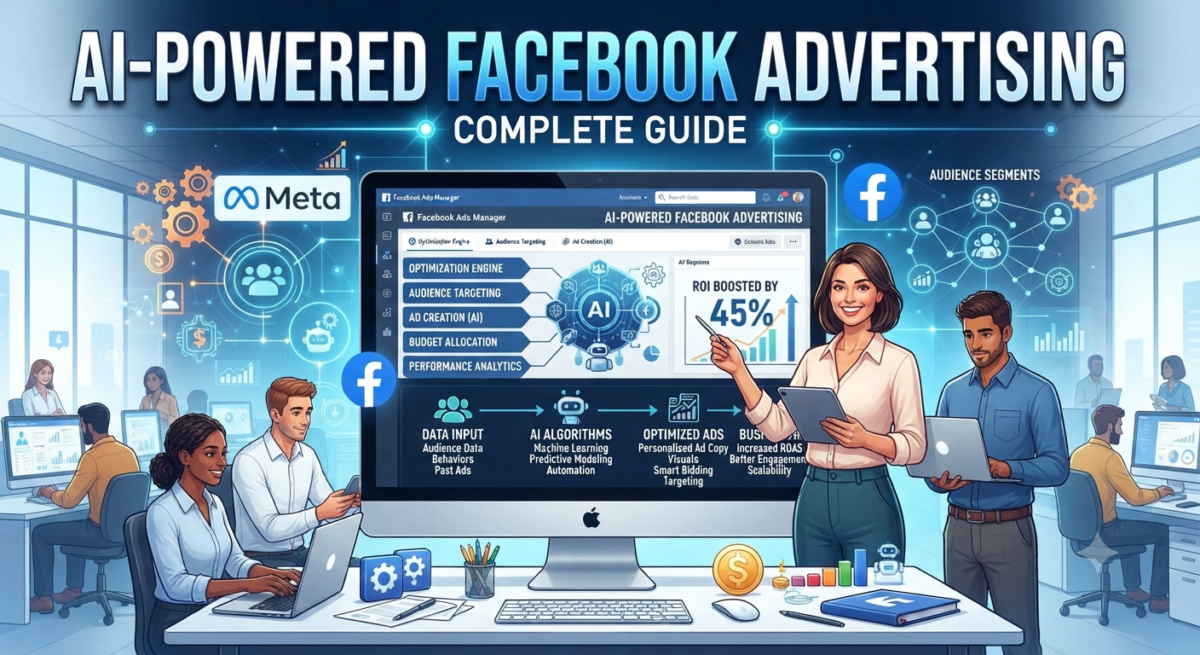
Meta continues investing heavily in artificial intelligence, machine learning, predictive analytics, and automation. These innovations are changing every stage of advertising—from audience research to creative development and campaign optimization. Advertisers no longer need to rely solely on manual campaign adjustments because Meta’s AI can analyze millions of signals in real time to deliver ads to users who are most likely to convert.
Whether you own a local business, an eCommerce store, a service company, or a global brand, understanding the newest Facebook advertising trends will help you make better marketing decisions throughout 2026. This guide explains the latest developments, practical strategies, and expert recommendations that can help businesses achieve sustainable growth using Facebook advertising.
Why Facebook Ads Still Matter in 2026
Despite increasing competition from TikTok, LinkedIn, YouTube, and other social platforms, Facebook remains one of the world’s most effective advertising platforms. Millions of businesses continue investing in Facebook because it offers advanced targeting capabilities, powerful automation, detailed analytics, and access to billions of active users across Facebook, Instagram, Messenger, and Audience Network.
One of Facebook’s biggest strengths is its ability to support businesses of every size. Small companies with limited advertising budgets can reach highly relevant audiences without spending thousands of dollars. Larger organizations benefit from sophisticated campaign structures, automated bidding strategies, and AI-powered optimization that improves efficiency over time.
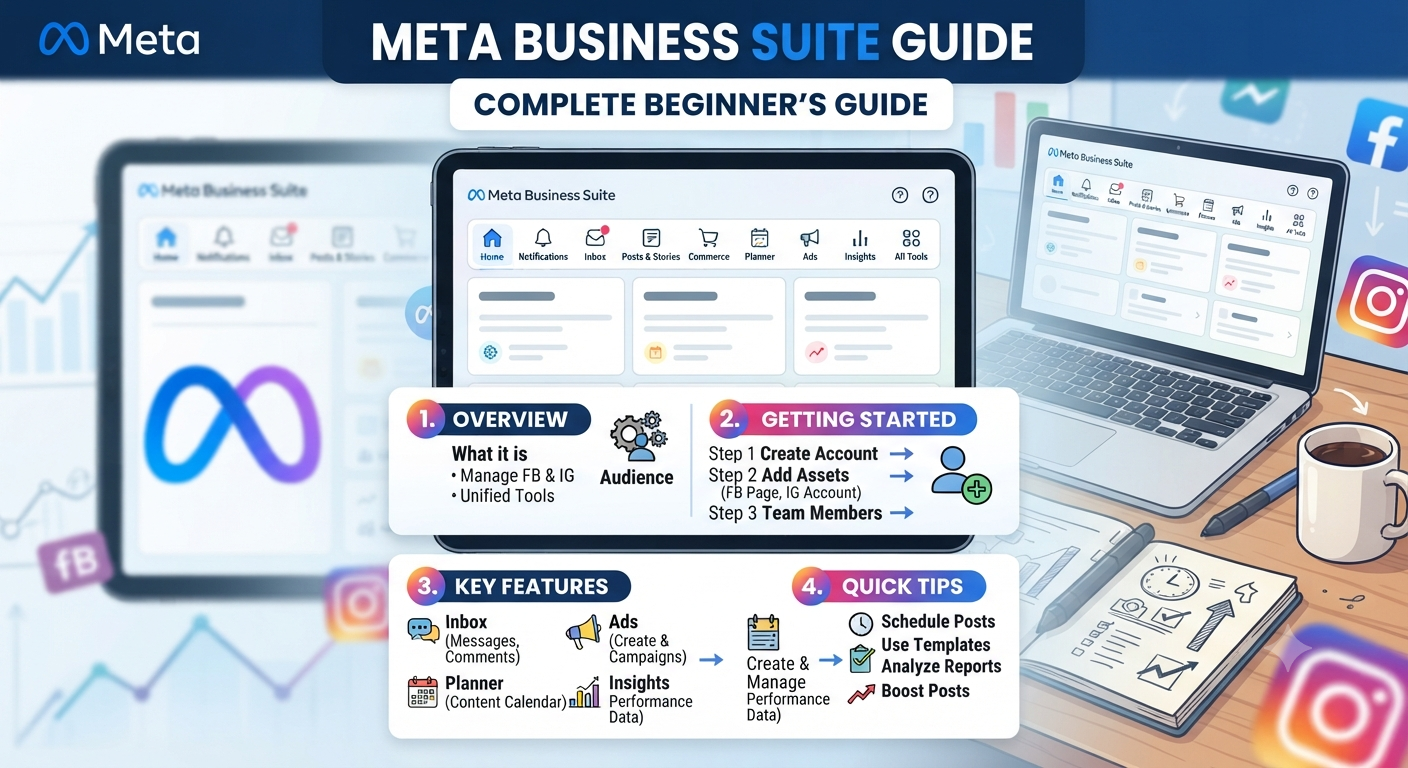
Another reason Facebook continues delivering exceptional results is the integration between its various platforms. Advertisers can manage campaigns across Facebook, Instagram, Messenger, and Reels from a single dashboard, simplifying campaign management while maximizing reach.
As privacy regulations continue evolving, Meta is placing greater emphasis on first-party data, server-side tracking, and AI-driven modeling. These improvements help advertisers maintain campaign performance even when traditional tracking methods become less reliable.
Businesses that adapt to these changes early will be better positioned to outperform competitors throughout 2026 and beyond.
Top Facebook Ads Trends for 2026
The advertising landscape is changing rapidly. Below are the most important trends every marketer should understand before launching their next campaign.
AI-Driven Campaign Automation
Artificial intelligence is no longer an optional feature it is becoming the foundation of successful Facebook advertising.
Meta’s AI now analyzes thousands of audience signals every second to determine who should see an advertisement, when it should appear, and which creative variation is most likely to generate engagement. Instead of relying entirely on manual optimization, advertisers can allow AI to continuously improve campaign performance based on real-time user behavior.
This automation reduces wasted advertising spend while increasing conversions. Businesses that provide Meta with quality conversion data often experience improved cost efficiency over time because the system becomes more accurate with every interaction.
Rather than focusing on countless manual adjustments, marketers should concentrate on developing compelling offers, persuasive messaging, and high-quality creative assets while allowing AI to handle much of the optimization process.
Advantage+ Campaigns Becoming the Standard
Advantage+ campaigns are quickly becoming one of Meta’s most effective advertising solutions.
Instead of manually creating multiple audience segments, advertisers can define their objectives while Meta automatically identifies the users most likely to complete a desired action. This approach significantly reduces campaign setup time and often improves overall performance.
For eCommerce brands, Advantage+ Shopping Campaigns continue producing impressive results by dynamically allocating budget toward the highest-performing products and audiences.
Service-based businesses also benefit because Meta can identify prospects showing stronger buying intent based on behavioral patterns rather than simple demographic filters.
As Meta expands its AI capabilities, Advantage+ campaigns are expected to become the default campaign structure for many advertisers during 2026.
First-Party Data Is More Valuable Than Ever
Privacy updates have fundamentally changed digital advertising over the past few years. Businesses can no longer depend entirely on third-party cookies for audience targeting.
Instead, successful advertisers are building stronger first-party data strategies by collecting customer information directly through website forms, lead generation campaigns, email subscriptions, loyalty programs, webinars, and customer accounts.
High-quality first-party data helps Meta better understand existing customers and create stronger Custom Audiences and Lookalike Audiences.
Organizations investing in customer relationship management systems and proper data collection processes will enjoy better campaign optimization and more accurate audience matching throughout 2026.
Short-Form Video Continues to Dominate
Consumer attention spans continue becoming shorter, making video content increasingly important.
Short-form videos consistently outperform many static image advertisements because they capture attention quickly and communicate information in a highly engaging format.
Successful advertisers are focusing on educational videos, product demonstrations, customer testimonials, behind-the-scenes content, and quick problem-solving clips that immediately deliver value.
Rather than producing highly polished television-style commercials, businesses are finding success with authentic, conversational videos that feel natural within users’ social media feeds.
Videos between fifteen and sixty seconds often deliver excellent engagement while encouraging users to take immediate action.
Facebook Reels Continue Driving Higher Engagement
Reels remain one of Meta’s fastest-growing content formats.
Users spend significant amounts of time watching short vertical videos, creating enormous advertising opportunities for businesses willing to adapt their creative strategy.
Successful Reels advertisements often include strong hooks during the first three seconds, clear storytelling, captions for silent viewing, and compelling calls to action.
Businesses should design advertisements specifically for vertical viewing rather than simply resizing horizontal videos.
Native-looking content typically performs better because it blends naturally with organic Reels, resulting in higher engagement and lower advertising costs.
Conversational Advertising Is Becoming More Powerful
Consumers increasingly expect immediate responses before making purchasing decisions.
Instead of directing every visitor to a website, many businesses now encourage users to begin conversations through Messenger or WhatsApp.
Conversation-based campaigns allow businesses to answer questions, qualify leads, schedule appointments, provide quotations, and build trust before requesting a purchase.
Artificial intelligence chat assistants further improve response times by handling frequently asked questions around the clock.
As customer expectations continue evolving, conversational advertising will play an increasingly important role in lead generation and customer support throughout 2026.
Predictive Audience Targeting Is Getting Smarter
One of the biggest changes in Facebook advertising is the shift from interest-based targeting to predictive audience targeting. Instead of relying only on the interests that users manually select or engage with, Meta’s machine learning predicts who is most likely to take action based on thousands of behavioral signals.
This means advertisers no longer need to create dozens of narrowly targeted audiences. In many cases, broader targeting combined with quality conversion data produces better results than highly restricted audience segments.
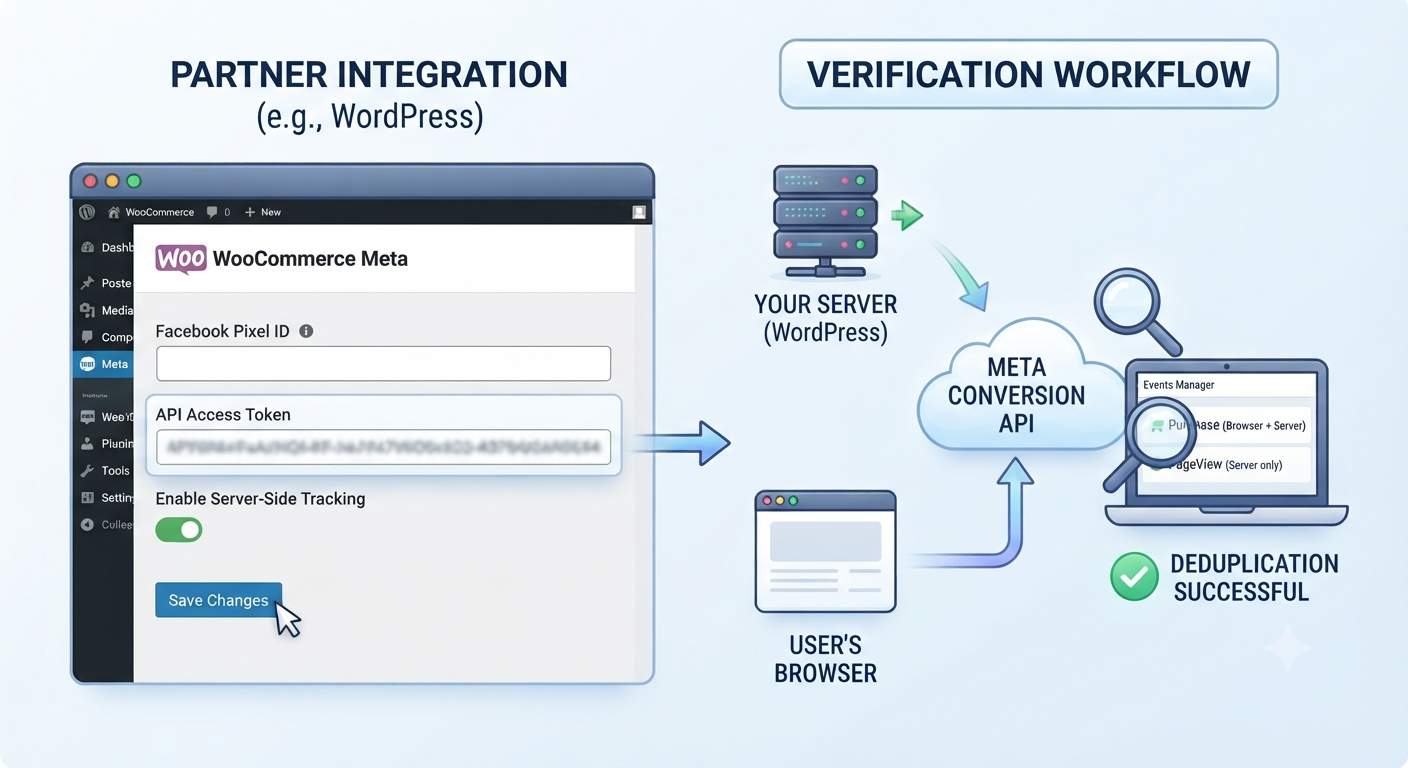
Businesses should focus on providing Meta with accurate conversion events through the Meta Pixel and Conversions API. The better the data, the smarter the algorithm becomes. Over time, Meta learns which users are most likely to become customers and continuously improves ad delivery.
This trend makes campaign management easier while helping businesses reach potential customers they may have never considered targeting manually.
Privacy-First Advertising Strategies
Privacy continues to shape the future of digital advertising. Consumers are more aware of how their personal data is collected, and governments are introducing stricter privacy regulations across the world.
Rather than viewing these changes as obstacles, successful advertisers are adapting their strategies by collecting first-party data ethically and transparently. Businesses should clearly explain why customer information is collected and how it benefits the user experience.
Using Meta’s Conversions API alongside the Meta Pixel improves tracking accuracy while respecting user privacy. This combination helps advertisers recover valuable conversion data that browser restrictions might otherwise block.
Companies that build trust through transparent privacy practices often achieve stronger customer relationships and better long-term advertising performance.
Creator Partnership Ads Continue to Grow
Consumers trust people more than traditional advertisements. That is why creator partnerships are becoming one of the most effective Facebook advertising strategies in 2026.
Businesses are collaborating with industry experts, influencers, and content creators who already have loyal communities. Instead of producing highly promotional advertisements, these partnerships introduce products and services naturally through authentic storytelling.
A creator explaining how they use a product in everyday life often generates more engagement than a polished commercial.
Brands should choose creators whose audience closely matches their target market rather than focusing only on follower count. A smaller creator with an engaged audience frequently delivers better results than a celebrity with millions of passive followers.
Dynamic Creative Optimization with Artificial Intelligence
Creating multiple advertisements used to require significant time and resources. Today, Meta can automatically test different headlines, descriptions, images, videos, and call-to-action buttons to identify the highest-performing combinations.
Dynamic Creative Optimization reduces guesswork and allows advertisers to improve campaign performance without manually creating dozens of separate advertisements.
Businesses should upload several creative variations for each campaign. Meta’s AI will continuously analyze performance and deliver the best combinations to the right audience at the right time.
This process increases click-through rates, improves conversions, and reduces advertising costs.
Best Facebook Ad Formats in 2026
Choosing the right ad format is just as important as selecting the right audience. Different campaign objectives require different creative approaches.
Image ads remain effective for promoting simple offers, announcements, and brand awareness campaigns. High-quality visuals combined with compelling copy continue to attract attention.
Video ads are ideal for demonstrating products, educating customers, and building trust. Videos allow businesses to explain complex topics while creating stronger emotional connections.
Carousel ads enable advertisers to showcase multiple products or highlight different features within a single advertisement. They work particularly well for eCommerce businesses.
Collection ads provide an immersive shopping experience by allowing users to browse products directly within Facebook before visiting a website.
Reels ads continue to deliver exceptional engagement because they integrate naturally into users’ content feeds. Short, entertaining, and educational videos often outperform traditional advertising formats.
Stories ads capture users in a full-screen mobile experience. Their temporary nature creates urgency, encouraging viewers to take immediate action.
Lead generation ads simplify the customer journey by allowing users to submit their information without leaving Facebook. This reduces friction and increases lead quality for service-based businesses.
Facebook Ads Targeting Trends
Audience targeting has evolved significantly over the past few years. Instead of depending entirely on narrow audience selections, advertisers are now combining automation with quality customer data.
Broad targeting is becoming increasingly effective because Meta’s artificial intelligence identifies likely buyers more accurately than manual audience segmentation in many industries.
Custom Audiences remain valuable for reconnecting with existing customers, website visitors, email subscribers, and previous leads. These audiences generally produce higher conversion rates because they already know the brand.
Lookalike Audiences continue helping businesses discover new customers who share similar characteristics with their best existing clients. When built from high-quality customer lists, these audiences often deliver excellent return on investment.
Website visitor audiences allow businesses to re-engage people who viewed products or services but did not complete a purchase. Retargeting remains one of the highest-converting Facebook advertising strategies.
Engagement audiences include users who interacted with videos, Facebook pages, Instagram profiles, or previous advertisements. These individuals have already demonstrated interest, making them strong candidates for future campaigns.
Facebook Ads Creative Trends
Creative quality has become one of the most important ranking factors for Facebook advertisements. Even the best audience targeting cannot compensate for weak creative assets.
Authenticity now outperforms perfection. Consumers respond better to genuine stories, real customer experiences, and practical demonstrations than overly polished corporate advertisements.
User-generated content continues producing excellent results because it feels trustworthy and relatable. Customer reviews, testimonials, and product demonstrations create confidence while reducing purchasing hesitation.
Vertical video has become the preferred format for mobile users. Businesses should design content specifically for smartphones instead of repurposing horizontal videos.
Captions are essential because many users watch videos without sound. Clear subtitles improve accessibility while increasing watch time.
Strong opening hooks capture attention during the first few seconds. Asking a question, presenting a surprising statistic, or immediately addressing a common customer problem encourages viewers to continue watching.
Personalized messaging is becoming increasingly important. Advertisements that speak directly to a customer’s challenges and goals typically achieve higher engagement than generic promotional content.
Facebook Ads Budget Trends
Effective budgeting is not about spending the most money. It is about investing wisely and scaling campaigns based on measurable performance.
Many advertisers begin with daily budgets to collect performance data before increasing investment. This approach allows businesses to identify winning campaigns without unnecessary financial risk.
Campaign Budget Optimization automatically distributes spending toward the best-performing ad sets. Instead of manually adjusting budgets every day, Meta allocates resources where they are most likely to generate results.
Automated bidding strategies continue improving as Meta’s artificial intelligence becomes more sophisticated. Businesses should avoid making frequent budget changes because doing so can reset the learning phase and reduce campaign efficiency.
Scaling should happen gradually. Increasing budgets in controlled increments helps maintain stable performance while giving Meta sufficient time to optimize delivery.
Measuring Facebook Ads Success in 2026
Successful advertising requires continuous measurement and optimization. Businesses should monitor performance indicators that directly relate to their marketing objectives instead of focusing only on vanity metrics.
Return on Ad Spend remains one of the most valuable measurements because it shows how much revenue is generated for every advertising dollar invested.
Click-Through Rate indicates how effectively advertisements capture attention and encourage users to learn more. A higher CTR generally reflects strong creative and relevant messaging.
Cost Per Click helps advertisers understand how efficiently traffic is being acquired. Lower costs often result from higher-quality advertisements and better audience targeting.
Cost Per Acquisition measures how much it costs to generate a customer or qualified lead. Businesses should compare acquisition costs with customer lifetime value to determine profitability.
Conversion Rate reveals how effectively landing pages and offers persuade visitors to complete desired actions after clicking an advertisement.
Customer Lifetime Value provides a long-term perspective by measuring the total revenue generated by each customer throughout their relationship with the business. Focusing only on immediate sales may overlook significant future value.
Common Facebook Ads Mistakes to Avoid
Many advertisers fail not because Facebook advertising is ineffective, but because they repeat avoidable mistakes.
Poor audience research often leads to wasted advertising spend. Businesses should understand their ideal customers before launching campaigns.
Weak ad creatives reduce engagement regardless of targeting quality. Every advertisement should clearly communicate value while encouraging users to take action.
Ignoring mobile optimization remains a common mistake. Since most Facebook users browse on smartphones, advertisements and landing pages must provide an excellent mobile experience.
Running only one advertisement limits optimization opportunities. Testing multiple headlines, visuals, and calls to action helps identify winning combinations.
Many businesses stop campaigns too quickly. Meta’s learning phase requires sufficient data before performance stabilizes. Premature decisions often prevent campaigns from reaching their full potential.
Finally, inaccurate tracking creates unreliable reporting. Proper implementation of the Meta Pixel and Conversions API ensures advertisers make decisions based on accurate data rather than assumptions.
Future of Facebook Advertising Beyond 2026
The future of social media advertising will be shaped by artificial intelligence, automation, personalization, and privacy-focused technology. Meta is investing heavily in AI-powered tools that help advertisers create campaigns faster, optimize performance automatically, and deliver more relevant ads to users.
One major trend is the growth of generative AI for ad creation. Businesses will be able to generate multiple versions of headlines, ad copy, images, and videos within minutes. While AI will speed up production, human creativity will remain essential for developing authentic brand stories and emotional connections with customers.
Voice search, visual search, and conversational commerce are also expected to become more common. Customers increasingly prefer interacting with businesses through Messenger, WhatsApp, and AI chatbots before making a purchase. Companies that provide quick, personalized responses will build stronger trust and improve conversion rates.
Another important development is omnichannel marketing. Instead of treating Facebook, Instagram, email, websites, and search engines as separate channels, successful businesses will create a seamless customer journey across every platform. This integrated approach improves user experience and increases the likelihood of conversions.
Businesses should also focus on continuous learning. Digital marketing evolves rapidly, and advertisers who regularly test new strategies, analyze campaign data, and adapt to platform updates will stay ahead of the competition.
Frequently Asked Questions
Is Facebook advertising still worth investing in during 2026?
Yes. Facebook remains one of the most effective advertising platforms because of its massive user base, advanced targeting capabilities, AI-powered optimization, and integration with Instagram, Messenger, and the Audience Network.
What is the biggest change in Meta advertising this year?
Artificial intelligence is the biggest change. AI now plays a central role in audience targeting, campaign optimization, bidding, creative testing, and budget allocation, making campaigns more efficient than ever before.
Which Facebook ad format performs best?
There is no single format that works for every business. Reels Ads and short-form video ads generally generate high engagement, while Lead Generation Ads work well for service businesses and Carousel Ads are highly effective for eCommerce brands.
How much should a business spend on Facebook Ads?
The ideal budget depends on your goals, industry, and competition. Small businesses can begin with a modest daily budget, analyze performance, and gradually scale successful campaigns instead of making large investments upfront.
What metrics should advertisers monitor?
Key performance indicators include Return on Ad Spend (ROAS), Cost Per Acquisition (CPA), Click-Through Rate (CTR), Conversion Rate, Cost Per Click (CPC), customer lifetime value, and overall revenue generated from advertising campaigns.
How often should campaigns be optimized?
Campaigns should be reviewed regularly, but frequent unnecessary changes should be avoided. Allow Meta’s learning phase to collect enough data before making significant adjustments.
Can small businesses compete with larger brands?
Absolutely. Small businesses often succeed by focusing on highly targeted audiences, creating authentic content, and offering exceptional customer experiences rather than trying to outspend larger competitors.
Should businesses use AI-generated content?
AI can assist with brainstorming, research, and creative variations, but human expertise is essential for creating authentic messaging that reflects your brand voice and connects with your audience.
Conclusion
The digital advertising landscape continues to evolve at an incredible pace. Businesses that embrace automation, improve creative quality, leverage first-party data, and focus on customer experience will be better positioned for long-term success.
Instead of relying on outdated advertising tactics, marketers should adopt data-driven decision-making, test new campaign strategies, and continuously optimize their performance. The combination of artificial intelligence and human creativity will define the next generation of successful advertising campaigns.
Remember that advertising success is not determined by the size of your budget. It is determined by understanding your audience, creating valuable content, measuring meaningful results, and consistently improving your campaigns based on real performance data.
Brands that invest in learning, experimentation, and customer-centric marketing will continue generating qualified leads, increasing conversions, and building stronger relationships with their customers for years to come.
Case Studies
Every business has unique goals, challenges, and opportunities. One of the best ways to understand what works is by reviewing real-world case studies.
At Bhatti Marketing, we believe in transparency and measurable results. Our case studies demonstrate how strategic planning, high-quality content, search engine optimization, paid advertising, and conversion optimization have helped businesses increase website traffic, generate qualified leads, and improve overall revenue.
Exploring real campaign results provides valuable insights into successful marketing strategies and helps businesses make informed decisions before investing in digital marketing.
Ready to take your digital marketing to the next level?
Whether you’re looking to improve paid advertising performance, increase website traffic, generate high-quality leads, or strengthen your online presence, the experts at K4 Security are here to help.
Contact our team today for a personalized digital marketing strategy designed around your business goals. Together, we can build campaigns that deliver measurable results, sustainable growth, and a stronger competitive advantage.
Start your journey toward smarter marketing and long-term business success today.