
Introduction
In today’s competitive online market, businesses need effective advertising strategies to reach the right audience at the right time. With millions of businesses investing in paid campaigns, choosing the correct platform has become a major decision for marketers.
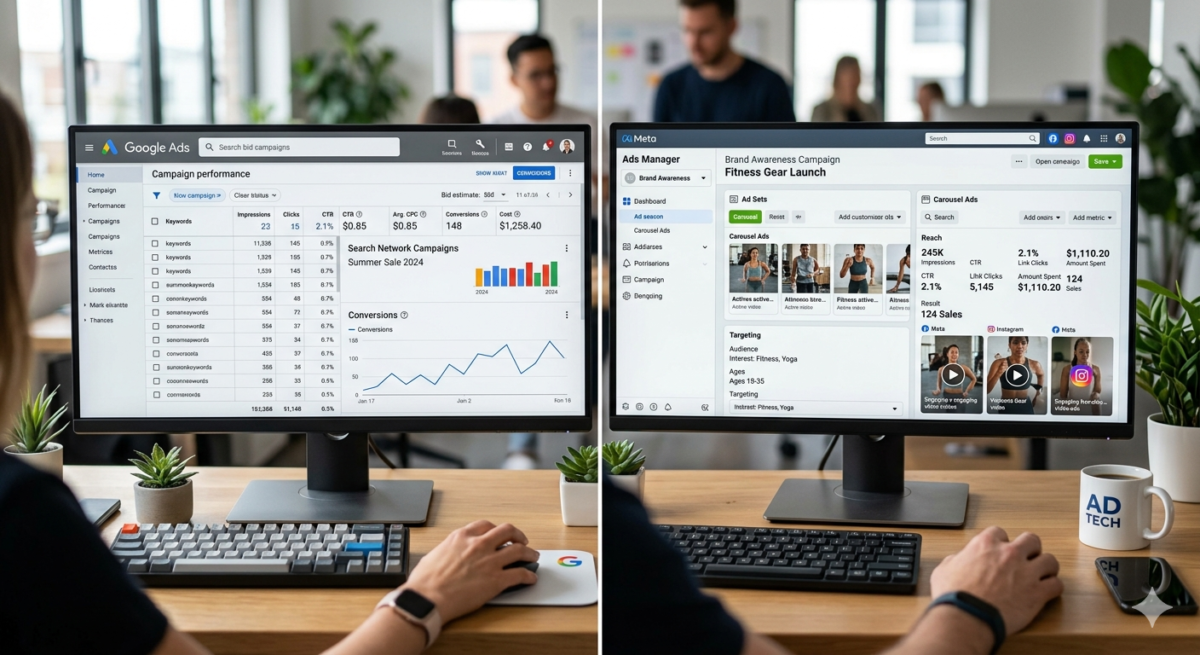
The debate around Facebook Ads vs Google Ads is common because both platforms offer powerful advertising opportunities, but they work differently. One platform focuses on connecting with users based on their interests and online behavior, while the other captures people actively searching for products or services.
Many business owners start advertising without understanding the difference between these platforms. This often leads to wasted budgets, poor targeting, and disappointing results. A successful campaign requires more than simply spending money; it requires understanding customer intent, audience behavior, and the right marketing approach.
Facebook Ads are mainly designed for creating awareness, building engagement, and reaching potential customers who may not know about your brand yet. Google Ads usually target users who already have a need and are actively searching for solutions.
Both platforms can generate strong results when used correctly. The better option depends on your business goals, audience, industry, budget, and marketing strategy.
This guide explains the difference between both advertising platforms and helps you decide which option fits your business needs.
Facebook Ads Explained
Facebook Ads are paid advertisements that appear across Facebook and its connected platforms. They allow businesses to promote products, services, or content to specific groups of people.
Unlike traditional advertising methods, Facebook advertising allows businesses to reach audiences based on their interests, demographics, behaviors, and online activities.
The biggest advantage of Facebook campaigns is that they help brands introduce themselves to potential customers. Instead of waiting for customers to search, businesses can place their message in front of people who may be interested.
For example, a clothing brand can target people interested in fashion, shopping, and lifestyle products. A restaurant can reach nearby users who engage with food-related content.
This makes Facebook a powerful platform for brand awareness and customer discovery.
How Facebook Ads Work
Facebook advertising works through audience targeting and campaign objectives. Businesses first select what they want to achieve, such as increasing website visits, generating leads, receiving messages, or increasing sales.
The platform then delivers advertisements to users who are most likely to take the desired action.
Facebook uses user data, interests, activity patterns, and engagement behavior to determine which people should see an advertisement.
A successful campaign depends on:
Understanding the target audience
Creating attractive visuals
Writing engaging ad copy
Testing different campaigns
Tracking results
Businesses that continuously optimize their ads usually achieve better performance compared to those who simply launch campaigns without analysis.
Types of Facebook Ads
Facebook offers different advertisement formats depending on business requirements.
Image ads are simple advertisements using visuals and text. They are commonly used for promoting products, offers, and services.
Video ads help brands explain their message through engaging visual content. They are effective for storytelling and demonstrating products.
Carousel ads allow businesses to display multiple images or products in one advertisement. This format works well for online stores and product collections.
Lead generation ads help businesses collect customer information directly through Facebook forms. They are useful for service providers and companies looking for potential customers.
Benefits of Facebook Advertising
Facebook advertising provides several advantages for businesses that want to build an online presence.
One major benefit is advanced audience targeting. Businesses can show advertisements to specific groups instead of reaching random users.
Another advantage is affordability. Small businesses can start with a limited budget and test campaigns before increasing investment.
Facebook also provides detailed analytics, allowing marketers to understand customer behavior, measure performance, and improve campaigns.
The platform is especially effective for businesses that need brand visibility and customer engagement.
Google Ads Explained
Google Ads is an online advertising platform where businesses pay to display advertisements on Google search results and partner websites.
Unlike social media advertising, Google Ads focuses heavily on search intent. People usually see these ads when they are already looking for information, products, or services.
For example, someone searching for “best security services near me” already has a specific need. A business using Google Ads can appear at the top of search results and capture that potential customer.
This makes Google advertising highly effective for generating leads and sales.
How Google Ads Work
Google Ads works mainly through keywords. Businesses select keywords related to their products or services, and their advertisements appear when users search those terms.
Advertisers compete in an auction system where factors like bid amount, ad quality, and relevance affect placement.
A strong Google campaign requires:
Keyword research
High-quality landing pages
Relevant advertisements
Conversion tracking
Continuous optimization
The goal is not only getting clicks but attracting visitors who are more likely to become customers.
Types of Google Ads
Search ads appear at the top of Google search results when users search specific keywords. They are one of the most popular advertising formats.
Display ads appear on websites across the internet. They are useful for increasing brand awareness and remarketing.
Shopping ads are designed for online stores. They show product images, prices, and details directly in search results.
Video ads appear on platforms like YouTube and help businesses reach audiences through video content.
Facebook Ads vs Google Ads: Key Differences
Although both advertising platforms help businesses reach customers, their approach is completely different. Choosing between them depends on how your customers behave online and where they are in the buying journey.
Facebook advertising focuses on discovering potential customers. People usually see ads while browsing social media, watching videos, or interacting with content. They may not be actively looking for a product, but a strong advertisement can create interest.
Google Ads focuses on capturing existing demand. Users normally search for a solution, compare options, and click advertisements because they already have purchase intent.
For example, someone scrolling Facebook may discover a new fitness product, while someone searching Google for “buy fitness equipment online” is already closer to making a purchase.
Audience Targeting Comparison
Targeting is one of the biggest differences between both platforms.
Facebook allows businesses to target users based on interests, age, location, behavior, lifestyle, and engagement patterns. This helps brands reach people who match their ideal customer profile.
For example, a travel company can target people interested in tourism, airlines, hotels, and adventure activities.
Google Ads uses keywords and search behavior to identify users. Instead of targeting interests, it focuses on what people are actively searching.
This means Google users often have stronger buying intent because they are already looking for a solution.
Search Intent vs Social Discovery
Search intent plays an important role in online advertising success.
Google Ads works through search intent. When someone searches a keyword, it shows that they have a question, problem, or need.
For example, a person searching “best digital marketing agency” is likely comparing agencies and looking for services.
Facebook works through social discovery. Users are not always searching for a product, but businesses can create demand through attractive content.
Both approaches are valuable. One captures existing customers, while the other helps create future customers.
Facebook Ads vs Google Ads Cost Comparison
Advertising costs depend on industry, competition, audience, and campaign quality.
Facebook Ads usually provide lower-cost reach because businesses can access large audiences with flexible budgets. This makes it suitable for awareness campaigns and testing new offers.
Google Ads can sometimes have higher costs because businesses compete for valuable keywords. Highly competitive industries often require more investment.
However, cost should not be the only factor. A cheaper advertisement that does not generate customers is less valuable than a higher-cost campaign that produces strong returns.
The best approach is measuring return on investment instead of only looking at advertising expenses.
Conversion Rate Comparison
Conversion rates depend on the type of business and campaign setup.
Google Ads often performs strongly for direct sales and lead generation because users already have buying intent.
Facebook Ads can perform extremely well for brands that need customer awareness, engagement, and long-term relationships.
A successful marketer studies the customer journey and uses each platform at the right stage.
A customer might first discover a brand through Facebook, research it on Google, and finally make a purchase after seeing multiple interactions.
Which Platform Is Better For Different Businesses?
E-commerce Businesses
Online stores can benefit from both platforms.
Facebook helps showcase products through creative visuals, videos, and customer-focused content. It is excellent for introducing new products and building brand loyalty.
Google Ads helps capture customers who are searching for specific products. Shopping campaigns can directly display products to users ready to buy.
A combination of both platforms often creates the strongest results.
Local Businesses
Local businesses usually benefit from Google Ads because customers often search for nearby services.
For example, someone looking for a restaurant, repair service, or professional company may search Google before making a decision.
Facebook can support local businesses by increasing awareness and engaging with the community.
Service-Based Businesses
Companies offering services such as marketing, security, consulting, education, or healthcare can use both advertising methods.
Google Ads helps capture people actively searching for services, while Facebook helps build trust through content and social proof.
Startups
New businesses often need awareness before expecting immediate sales.
Facebook Ads can help startups introduce their brand, test different audiences, and understand customer interests.
Once they identify demand, Google Ads can help capture customers searching for their solutions.
Facebook Ads vs Google Ads Pros and Cons
Facebook Ads Advantages
Facebook provides strong audience targeting options.
It allows businesses to build brand awareness.
Creative content performs well on the platform.
Businesses can start campaigns with smaller budgets.
It supports customer engagement and community building.
Facebook Ads Challenges
Users may not always have purchase intent.
Successful campaigns require creative testing.
Competition for attention is high.
Google Ads Advantages
Google captures users with strong buying intent.
It can generate direct leads and sales.
Businesses can target specific search terms.
Results are easier to measure.
Google Ads Challenges
Competitive keywords can become expensive.
Poor keyword selection can waste budget.
Landing page quality affects campaign performance.
Can You Use Facebook Ads and Google Ads Together?
Many successful businesses do not choose only one platform. They create a complete marketing funnel by combining both.
Facebook can introduce people to a brand, while Google can capture customers when they are ready to purchase.
For example, a customer may discover a company through a Facebook campaign, visit the website, and later search for the company on Google before buying.
Using both platforms creates multiple touchpoints and increases the chance of conversion.
A smart advertising strategy focuses on customer behavior rather than choosing one platform blindly.
Final Verdict: Facebook Ads or Google Ads?
There is no universal winner between both platforms.
The right choice depends on your business goals.
If your goal is brand awareness, audience growth, and reaching new customers, Facebook advertising can be a strong option.
If your goal is capturing customers who are already searching for products or services, Google Ads may deliver better results.
For many businesses, the best strategy is combining both platforms. Facebook creates demand, while Google captures demand.
A successful campaign requires proper research, quality content, accurate targeting, and continuous optimization.
FAQs
Is Facebook Ads cheaper than Google Ads?
Facebook Ads can often provide cheaper reach, but the final cost depends on your industry, audience, competition, and campaign objective.
Which gives better ROI: Facebook Ads or Google Ads?
Both platforms can provide strong ROI. Google often performs well for high-intent searches, while Facebook works well for awareness and customer engagement.
Are Google Ads better for sales?
Google Ads can be highly effective for sales because users often search with buying intent.
Can beginners use Facebook Ads?
Yes, beginners can start Facebook campaigns with small budgets, but learning targeting and optimization is important.
Should I run both Facebook Ads and Google Ads?
Using both platforms can help businesses reach customers at different stages of the buying journey.
How Bhatti Marketing Helps Businesses Grow With Paid Advertising
Running successful advertising campaigns requires experience, testing, and a data-driven approach. At Bhatti Marketing, we help businesses create result-focused digital marketing campaigns designed to attract the right audience.
Our team focuses on understanding your business goals, analyzing customer behavior, creating high-performing campaigns, and improving results through continuous optimization.
Whether your goal is generating leads, increasing sales, or building brand awareness, our advertising strategies are designed to deliver measurable growth.
Explore our case studies from Bhatti Marketing to see how we help businesses improve their online presence and achieve better marketing results.