How to Start a Small Business Idea

Small Business Ideas to Start Now
Summary
This guide explores practical business ideas, planning strategies, and SEO techniques to help you start and grow successfully. It focuses on real-world execution, market understanding, and content strategies that improve visibility, attract customers, and build sustainable income in today’s competitive digital landscape.
Introduction
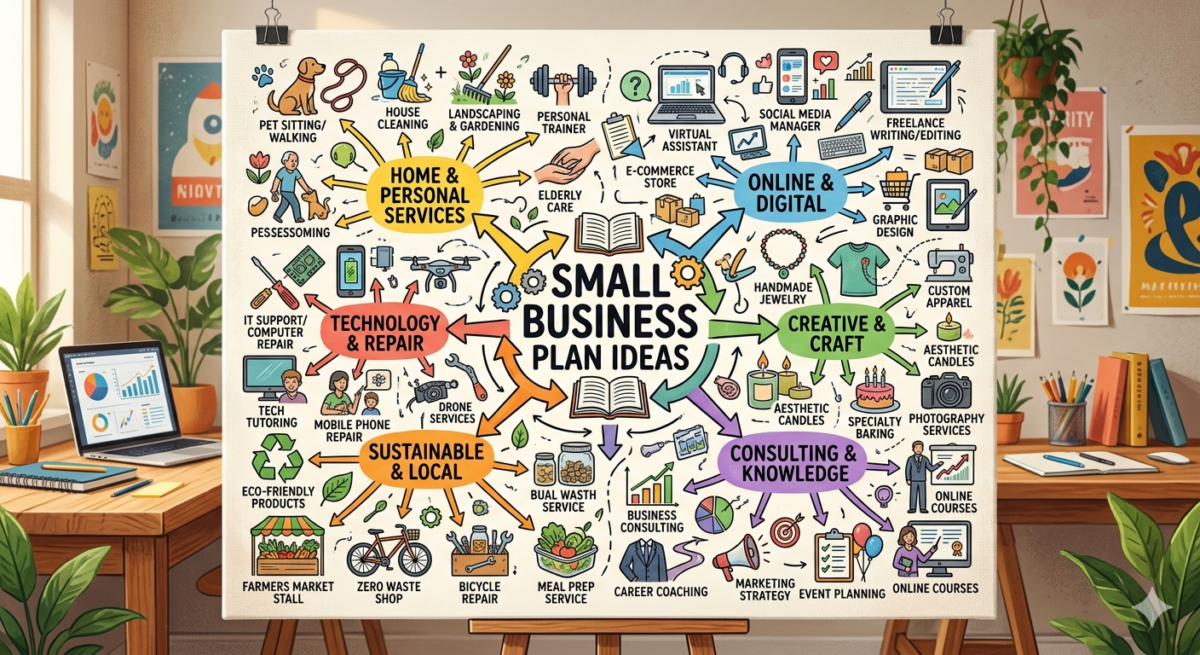
Starting a business today is no longer limited to big investments or complex infrastructure. With the right approach, even a simple idea can grow into a sustainable venture. The challenge, however, lies in identifying small business plan ideas that are practical, profitable, and scalable.
A well-structured business plan transforms an idea into a roadmap. It helps you understand your target market, define your value, and build a strategy that actually works in real-world conditions. In this guide, we’ll walk through proven ideas, planning essentials, and SEO-driven strategies to help your business succeed and your content rank on Google’s first page and AI overviews.
What is a Small Business Plan
A small business plan is a structured document that outlines your business idea, target audience, revenue model, and growth strategy. It is not just a document for investors; it is your personal blueprint for execution.
A good plan answers key questions. Who are your customers? What problem are you solving? How will you make money? Without clear answers, even the best ideas fail to gain traction.
From real-world experience, businesses that start with clarity tend to scale faster. Planning does not mean complexity. It means direction.
Why Choosing the Right Idea Matters
Not every idea is worth pursuing. Some look profitable on paper but fail due to lack of demand or high competition.
The right idea sits at the intersection of three things. Your skills, market demand, and profit potential. If one of these is missing, the business struggles.
For example, starting a digital service with skills you already have reduces cost and risk. On the other hand, entering a saturated market without differentiation leads to slow growth.
Trends Shaping Small Businesses Today
Modern businesses are shaped by digital transformation and changing consumer behavior. People prefer convenience, personalization, and speed.
Online services, remote work, and niche markets are dominating. Customers now search before they buy, which means your online presence matters more than ever.
Businesses that combine offline reliability with online visibility outperform traditional models.
Low-Cost Small Business Ideas
Many successful businesses start with minimal investment. The key is to leverage existing skills and tools.
Freelancing is one of the most accessible options. Writing, graphic design, and marketing services can be started with just a laptop and internet connection. These services scale well because demand is consistent.
Another strong option is e-commerce. Dropshipping eliminates the need for inventory, while print-on-demand lets you sell customized products without upfront costs.
Home-based food businesses also perform well in local markets. If you can maintain quality and consistency, word-of-mouth marketing can drive steady growth.
Online Business Opportunities
Online businesses offer flexibility and scalability. Blogging remains one of the most powerful long-term strategies. A niche blog with valuable content can generate income through ads, affiliate marketing, and digital products.
Affiliate marketing works well if you understand your audience. Recommending relevant products builds trust and creates passive income streams.
Online coaching and consulting are growing rapidly. If you have expertise in a specific field, you can monetize it through one-on-one sessions or group programs.
Selling digital products like ebooks or courses is another profitable model. Once created, these products can generate income repeatedly without additional cost.
Service-Based Business Ideas
Service-based businesses are often easier to start because they rely on skills rather than inventory.
Cleaning services, for example, require minimal setup and have consistent demand. Similarly, lawn care and maintenance businesses perform well in residential areas.
Personal fitness training is another growing sector. With growing health awareness, people are willing to invest in personalized guidance.
Virtual assistant services are in high demand as businesses look to outsource administrative tasks. This model allows you to work remotely while serving clients globally.
Creative and Innovative Ideas
Innovation often comes from solving everyday problems. Subscription box businesses are a great example. They offer curated products delivered regularly, creating recurring revenue.
Mobile car wash services are another practical idea. Customers prefer convenience, and bringing the service to their doorstep adds value.
Event planning is ideal for those with organizational skills. From weddings to corporate events, this industry offers high-profit opportunities.
Social media management agencies are also growing. Businesses need help maintaining their online presence, and this creates consistent demand.
Local Small Business Ideas
Local businesses remain essential because they serve immediate community needs.
Opening a café or small coffee shop can be profitable if location and quality are right. People value experience as much as the product.
Pet services such as grooming and sitting are growing due to increasing pet ownership. These services often lead to repeat customers.
Tutoring centers are another strong option. Education is always in demand, and specialized coaching can command higher fees.
Food trucks provide flexibility and lower startup costs compared to restaurants. They allow you to test markets before expanding.
Key Elements of a Strong Business Plan
A strong business plan includes several core components. Market research is the foundation. Understanding your audience helps you tailor your offerings.
Your value proposition defines what makes you different. Without differentiation, customers have no reason to choose you.
The revenue model explains how you will make money. This includes pricing strategy and sales channels.
Marketing strategy is crucial. Even the best product fails without visibility. Digital marketing, SEO, and social media play a key role here.
Financial projections help you plan for growth and manage risks. They give you a clear picture of expenses and expected income.
Tips for Choosing the Right Business Idea
Choosing the right idea requires honest evaluation. Start with your strengths. Skills reduce learning time and increase confidence.
Analyze market demand. Use tools like keyword research and competitor analysis to validate your idea.
Consider startup costs carefully. Low investment reduces risk, especially in the early stages.
Evaluate competition. High competition is not always bad, but you must have a unique angle.
Common Mistakes to Avoid
One of the biggest mistakes is lack of planning. Many people rush into execution without understanding the market.
Ignoring customer needs is another issue. Businesses succeed when they solve real problems.
Underestimating costs leads to financial stress. Always plan for unexpected expenses.
Poor marketing strategy limits growth. Visibility is essential in today’s digital world.
FAQs
What is the best small business to start today
The best business depends on your skills and market demand. Online services and local service-based businesses are currently among the most profitable.
How much money do I need to start
Many small businesses can be started with minimal investment. Freelancing and online services often require less than traditional businesses.
How long does it take to become profitable
It varies by industry, but most small businesses take several months to a year to become consistently profitable.
Do I need a formal business plan
Yes, even a simple plan helps you stay focused and organized. It increases your chances of success.
How can I attract customers
Use digital marketing strategies such as SEO, social media, and content marketing to reach your audience effectively.
Conclusion
Building a successful business starts with the right idea and a clear plan. By focusing on practical strategies, understanding your market, and maintaining consistency, you can turn a simple idea into a profitable venture.
Success does not come from complexity. It comes from clarity, execution, and continuous improvement.