Facebook Ad Copywriting Tips for Better Results
Dynamic Product Ads Guide: Complete Marketing Strategy
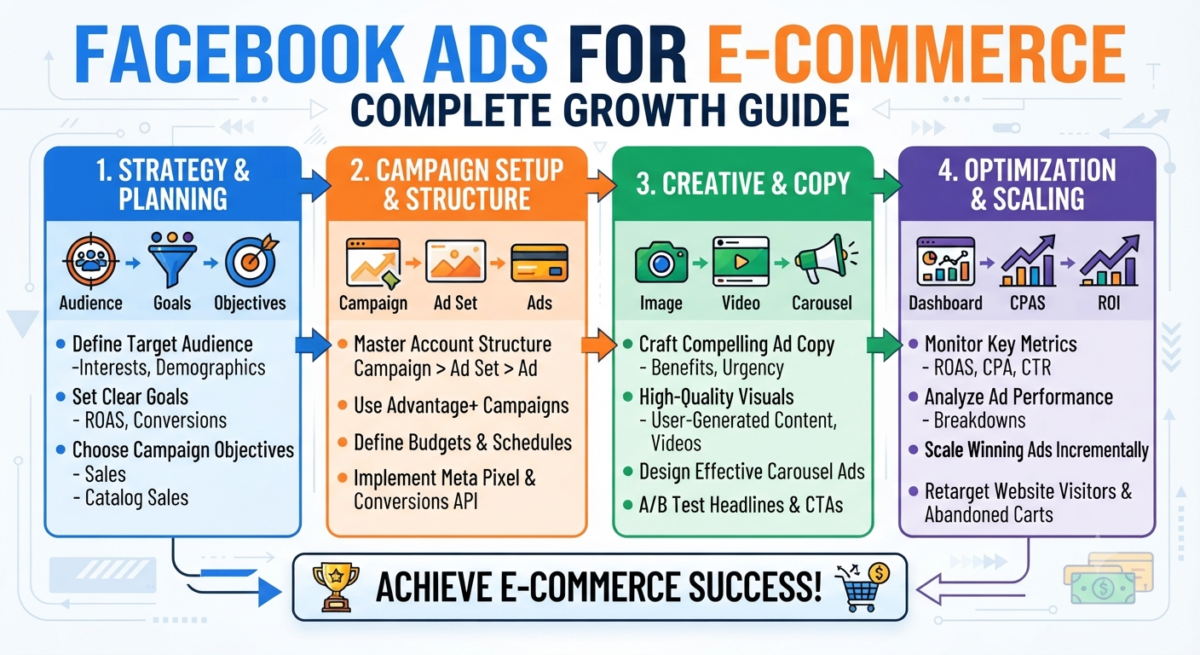
Running an online store is more competitive than ever. Every day, thousands of businesses launch new products, compete for customer attention, and invest in digital marketing to increase sales. Among all available advertising platforms, Facebook Ads for E-commerce remain one of the most powerful ways to reach potential customers and grow an online business.
Whether you own a fashion store, electronics shop, beauty brand, home décor business, or even offer professional services such as K4 Security training courses, Facebook advertising provides advanced targeting options that connect your products with people who are genuinely interested in buying them. Instead of waiting for customers to discover your website, Facebook allows your business to appear directly in front of highly relevant audiences across Facebook, Instagram, Messenger, and the Meta Audience Network.
The biggest advantage of Facebook advertising is its ability to combine data, creativity, and automation into one marketing platform. Businesses can promote new arrivals, recover abandoned carts, retarget previous visitors, and encourage repeat purchases while carefully controlling their advertising budget.
This guide explains how Facebook advertising works, why it is essential for online stores, and how businesses can build campaigns that consistently generate profitable results. The strategies shared here are based on real-world marketing experience and modern SEO principles designed to create content that satisfies both readers and search engines.
What Are Facebook Ads for E-commerce?
Facebook Ads for E-commerce are paid digital advertisements created through Meta Ads Manager to promote products, collections, or online stores across Facebook, Instagram, Messenger, and Meta’s partner platforms. These advertisements help businesses attract qualified visitors, increase conversions, and improve overall online revenue.
Unlike traditional advertising, Facebook focuses on people rather than keywords. The platform analyzes user behavior, interests, demographics, shopping habits, online activities, and engagement patterns to display relevant advertisements to users who are more likely to become customers.
For example, if someone frequently interacts with fitness content, searches for gym equipment, and follows health-related brands, Facebook can display advertisements for sportswear, protein supplements, or exercise equipment from an online retailer.
This intelligent audience targeting makes Facebook one of the most effective advertising platforms for e-commerce businesses.
Another major advantage is that Facebook integrates seamlessly with Instagram Shopping, allowing customers to discover products while browsing their social feeds. Businesses can also upload their complete product catalog, enabling dynamic advertisements that automatically display products users previously viewed on the website.
Today’s Facebook advertising ecosystem supports businesses of every size. A startup launching its first product can advertise with a modest budget, while established brands can manage large-scale campaigns targeting customers across multiple countries.
Success depends on understanding customer intent, creating engaging visuals, writing persuasive copy, and continuously optimizing campaigns using real performance data.
Why Facebook Ads Are Important for E-commerce
Consumer buying behavior has changed significantly over the past decade. Instead of visiting physical stores first, many shoppers discover products through social media before making purchasing decisions.
Facebook and Instagram have become product discovery platforms where customers browse recommendations, watch videos, compare brands, and interact with businesses before completing purchases.
This shift has made Facebook advertising an essential marketing channel for online stores.
One of the biggest reasons businesses invest in Facebook advertising is its enormous audience. Billions of active users interact with Meta platforms every month, creating opportunities to reach customers across different age groups, industries, and geographic locations.
However, audience size alone is not what makes Facebook valuable.
The real strength lies in advanced audience targeting.
Businesses can create campaigns based on interests, shopping behavior, income categories, education, occupations, previous website visits, customer lists, engagement history, and even users who closely resemble their existing customers.
This level of precision helps reduce wasted advertising spend while increasing conversion opportunities.
Facebook advertising also supports every stage of the customer journey.
Someone discovering your brand for the first time may see an awareness campaign introducing your products.
Later, they might receive a carousel advertisement featuring best-selling items.
If they visit your website without purchasing, Facebook can automatically show retargeting advertisements reminding them about the products they viewed.
Finally, returning customers can receive loyalty campaigns promoting complementary products or exclusive discounts.
This full-funnel marketing approach significantly improves conversion rates compared to relying on organic traffic alone.
Another reason Facebook Ads perform well for e-commerce is measurable performance.
Traditional advertising often makes it difficult to determine which marketing activities generate sales.
Facebook provides detailed analytics showing impressions, clicks, conversions, cost per purchase, return on ad spend (ROAS), customer acquisition costs, and many other metrics.
These insights allow marketers to improve campaigns continuously instead of relying on assumptions.
Automation has further strengthened Facebook’s advertising platform.
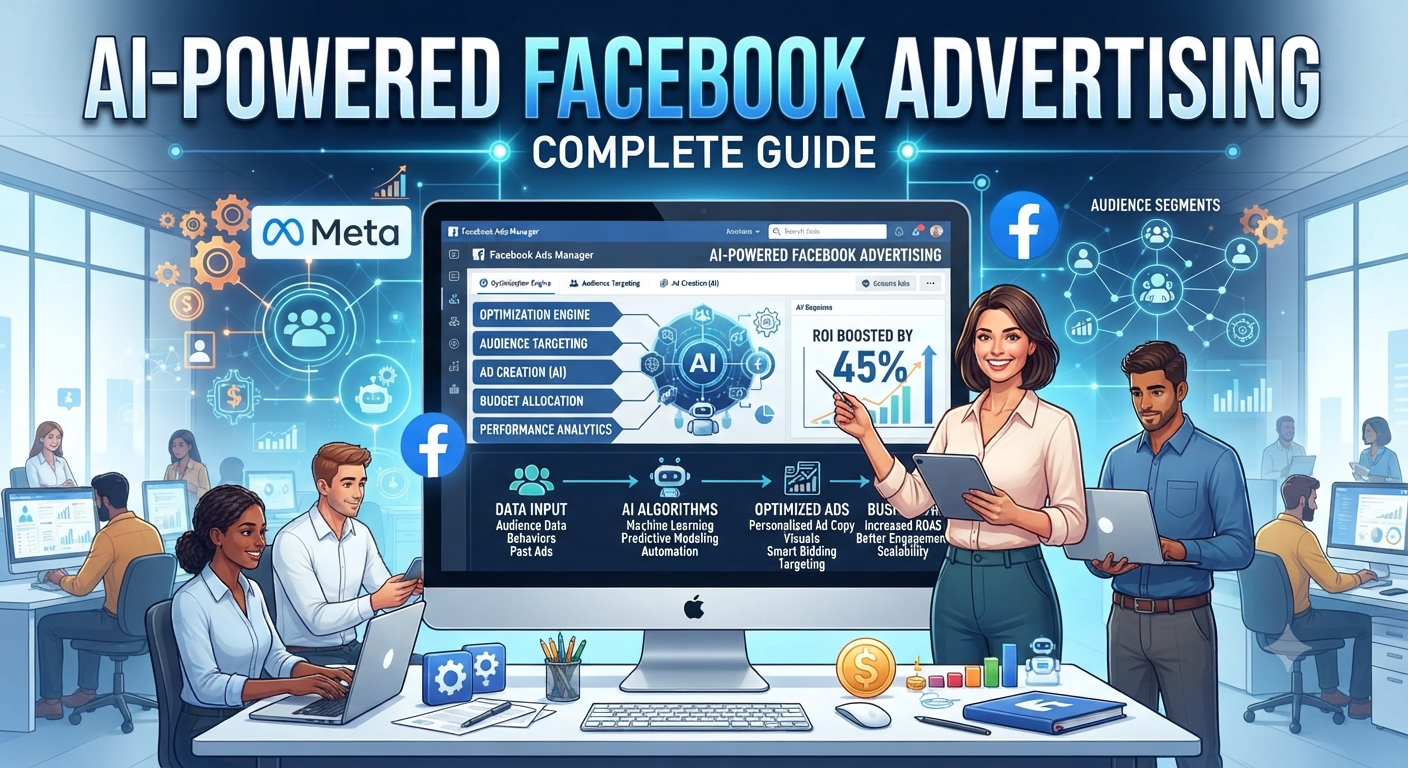
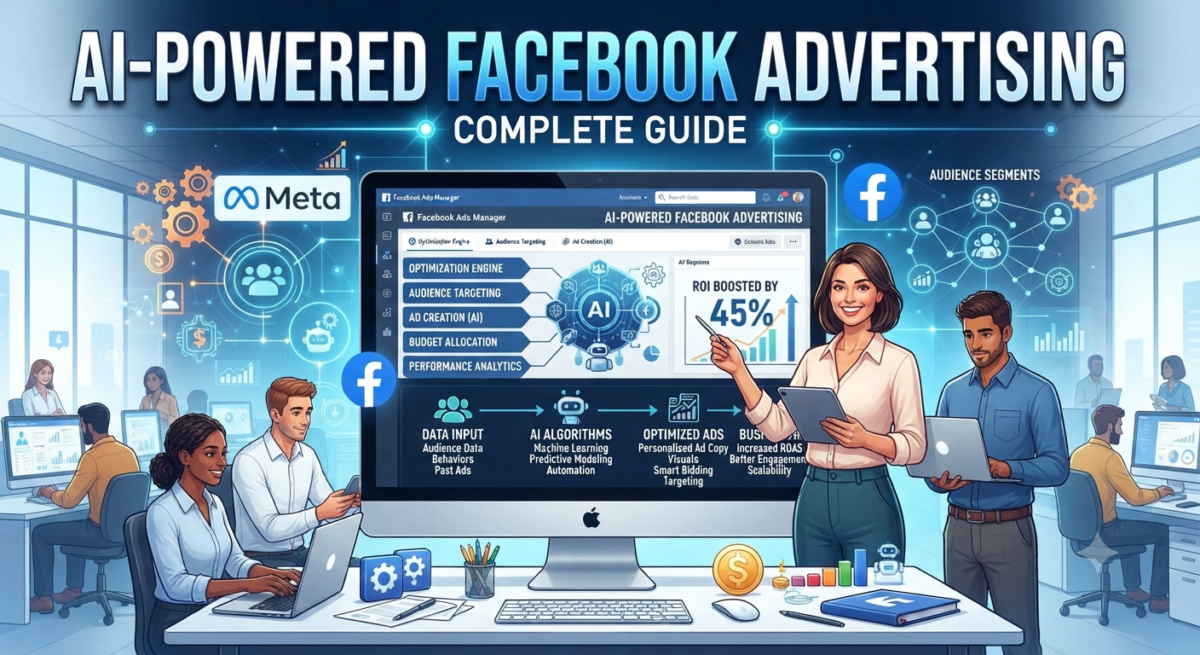
Artificial intelligence now helps optimize bidding strategies, audience expansion, creative delivery, and budget allocation based on campaign objectives.
Rather than manually adjusting every setting, advertisers can use Meta’s machine learning capabilities to improve campaign performance over time.
Businesses offering services can also benefit from Facebook advertising.
For example, K4 Security Services can promote professional security training courses, emergency first aid programs, FREC qualifications, and SIA courses to individuals actively interested in career development. Well-targeted campaigns generate qualified enquiries while strengthening brand awareness among relevant audiences.
Facebook advertising also complements search engine optimization.
SEO captures users actively searching on Google, while Facebook introduces products to people who may not yet know they need them.
Combining both strategies creates multiple customer touchpoints, improving brand visibility and increasing overall marketing effectiveness.
As online competition continues to grow, businesses that invest in data-driven Facebook advertising gain a stronger competitive advantage through better targeting, personalized customer experiences, and scalable marketing campaigns.
Benefits of Facebook Ads for Online Stores
Every successful e-commerce business shares one common goal: reaching the right customers at the right time. Facebook advertising makes this possible by combining detailed audience insights with powerful campaign optimization. Instead of showing advertisements to a broad audience, businesses can focus on people who are most likely to engage with their products and complete a purchase.
One of the biggest advantages is increased website traffic. A well-planned campaign sends highly relevant visitors to your online store rather than attracting random clicks. Since these visitors have already shown interest in similar products or services, they are more likely to explore your website, add items to their cart, and complete the checkout process.
Facebook advertising also delivers an impressive return on investment when campaigns are managed correctly. Businesses can start with a modest budget, monitor performance, and gradually increase spending on campaigns that consistently generate sales. This approach minimizes risk while maximizing profitability.
Another significant benefit is the ability to reconnect with previous visitors. Many shoppers browse products but leave without making a purchase. Facebook’s retargeting capabilities allow businesses to remind these visitors about the products they viewed, encouraging them to return and complete their order. These remarketing campaigns often achieve higher conversion rates because they target users who are already familiar with the brand.
Mobile shopping continues to grow every year, making Facebook an ideal advertising platform. Most users browse Facebook and Instagram using smartphones, allowing businesses to showcase products where customers spend a large portion of their online time. Mobile-friendly advertisements, combined with fast-loading landing pages, create a seamless shopping experience that encourages purchases.
Facebook also helps strengthen brand recognition. Even when users do not buy immediately, repeated exposure to professionally designed advertisements builds familiarity and trust. Over time, this increases the likelihood that customers will choose your business when they are ready to make a purchase.
Artificial intelligence has further improved campaign performance. Meta’s machine learning algorithms automatically optimize ad delivery, identify high-performing audiences, and allocate budgets more efficiently. Instead of manually adjusting every campaign, advertisers can benefit from automation while focusing on improving creative content and customer experience.
Businesses offering professional services can also leverage these advantages. For example, K4 Security Services can promote SIA training courses, Emergency First Aid qualifications, and FREC certifications to users interested in security careers. By targeting the right audience, training providers can generate qualified enquiries while improving their return on advertising spend.
The combination of precise targeting, measurable performance, and scalable campaigns makes Facebook advertising one of the most valuable marketing channels for modern online businesses.
Types of Facebook Ads for E-commerce
Facebook offers several advertising formats, each designed to support different marketing objectives. Choosing the right format depends on your products, target audience, and campaign goals.
Image Ads
Image advertisements are among the simplest and most effective formats. A high-quality product image paired with persuasive copy can quickly capture attention as users scroll through their news feed.
Image ads work particularly well for promoting new arrivals, seasonal offers, limited-time discounts, or individual best-selling products. The key to success lies in using professional photography that highlights product quality while maintaining consistent brand identity.
Video Ads
Video advertisements create stronger emotional engagement than static images. They allow businesses to demonstrate product features, explain benefits, showcase customer testimonials, or tell the story behind their brand.
Short videos that capture attention within the first few seconds generally perform better because social media users tend to scroll quickly. Clear messaging, engaging visuals, and captions improve viewer retention and encourage interaction.
Carousel Ads
Carousel advertisements display multiple images or videos within a single advertisement. Each card can feature a different product, category, or product feature, giving businesses the opportunity to showcase a wider range of offerings.
For online retailers with large inventories, carousel ads provide an excellent way to highlight collections without requiring users to leave Facebook immediately.
Collection Ads
Collection advertisements create an immersive shopping experience by combining a featured image or video with multiple products displayed underneath. When users tap the advertisement, they enter a full-screen shopping environment where they can browse products without interruption.
This format performs particularly well for fashion brands, furniture retailers, cosmetics companies, and lifestyle businesses that rely heavily on visual presentation.
Dynamic Product Ads
Dynamic Product Ads automatically promote products based on user behaviour. If someone visits your website and views a specific product without purchasing, Facebook can display that same product later as a reminder.
This personalized advertising approach significantly improves conversion rates because customers see products they have already expressed interest in purchasing.
Dynamic campaigns are especially valuable for stores with hundreds or thousands of products, as they automatically update product availability and pricing through the connected product catalogue.
Instant Experience Ads
Instant Experience advertisements provide an interactive full-screen mobile experience. Businesses can combine videos, images, product catalogues, and storytelling into one engaging advertisement.
Because these experiences load quickly within Facebook, users enjoy smoother interactions that often lead to higher engagement and increased conversions.
Selecting the appropriate advertising format should always align with your marketing objectives. Many successful e-commerce brands combine multiple formats within the same campaign to reach customers at different stages of the buying journey.
How to Set Up Facebook Ads for E-commerce
Creating profitable Facebook campaigns involves much more than publishing an advertisement. A structured setup process ensures accurate tracking, efficient budget allocation, and continuous campaign improvement.
Create a Meta Business Account
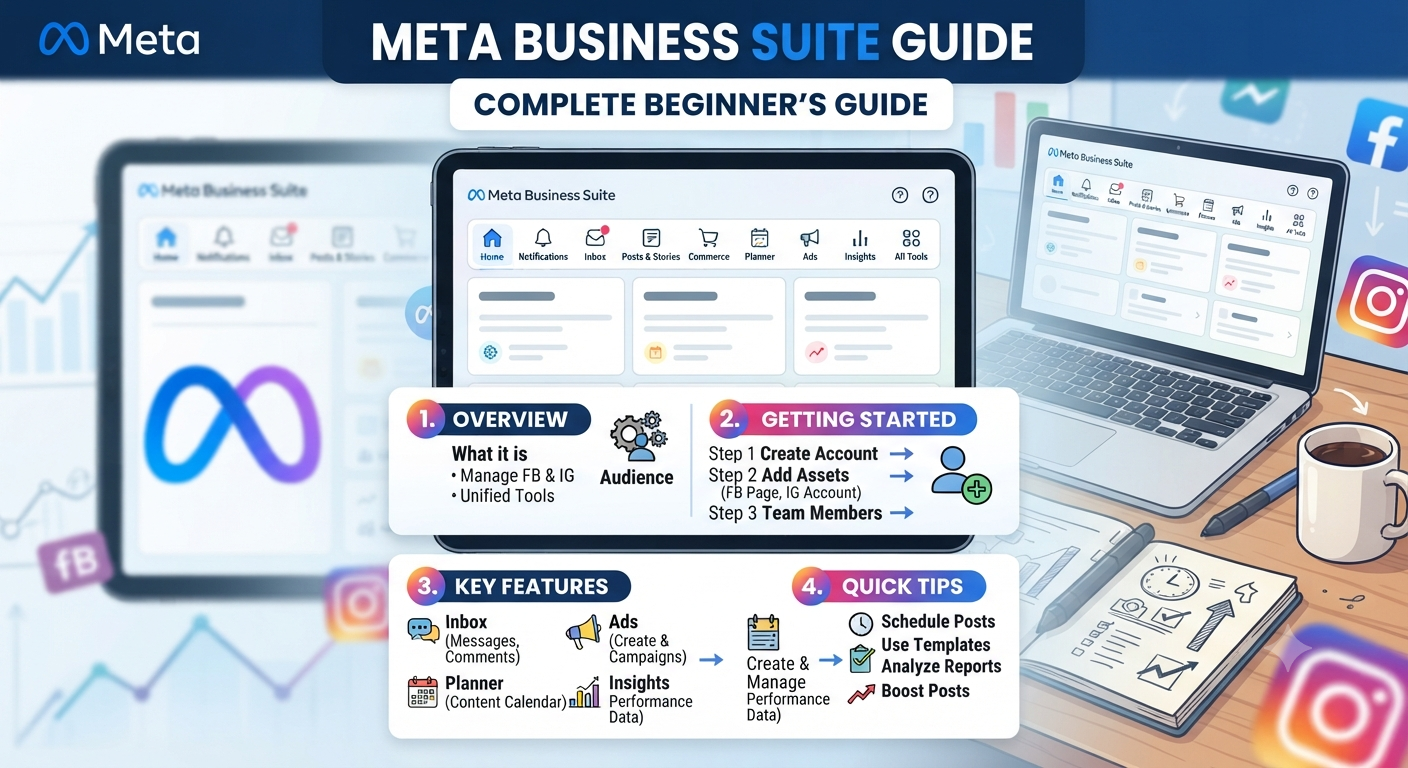
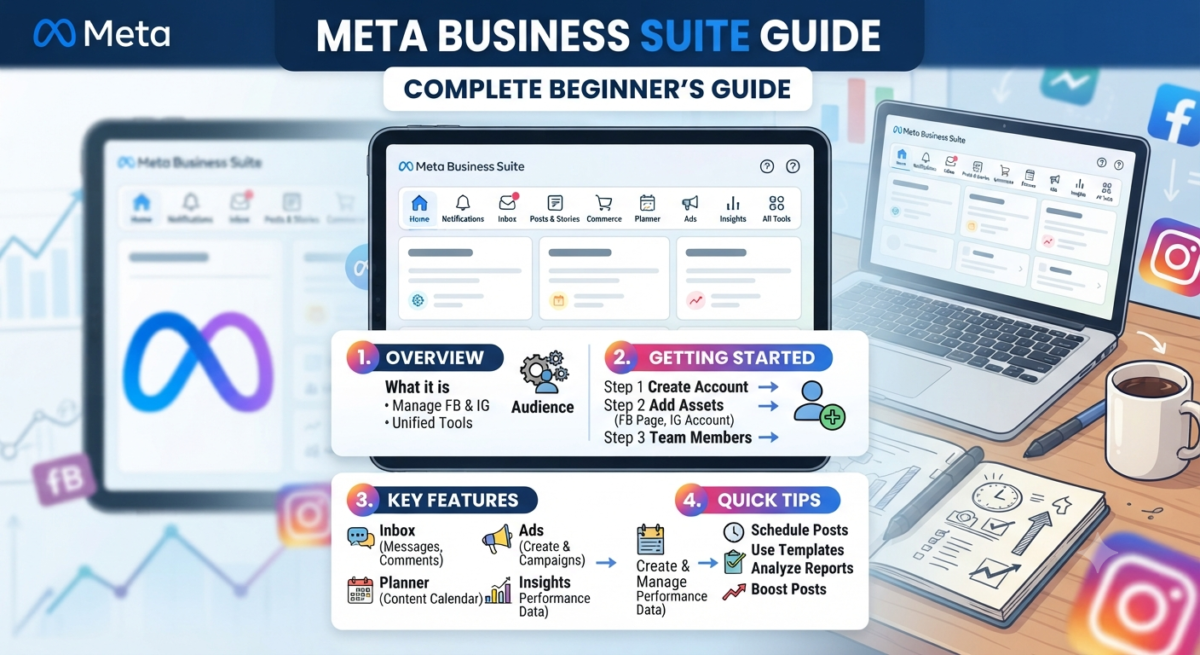
The first step is establishing a Meta Business account. This centralized platform allows businesses to manage advertising campaigns, Facebook Pages, Instagram accounts, payment methods, team permissions, and performance reporting from one dashboard.
Using Business Manager also improves account security and simplifies collaboration between marketing teams.
Install the Meta Pixel
One of the most important components of successful Facebook advertising is the Meta Pixel.
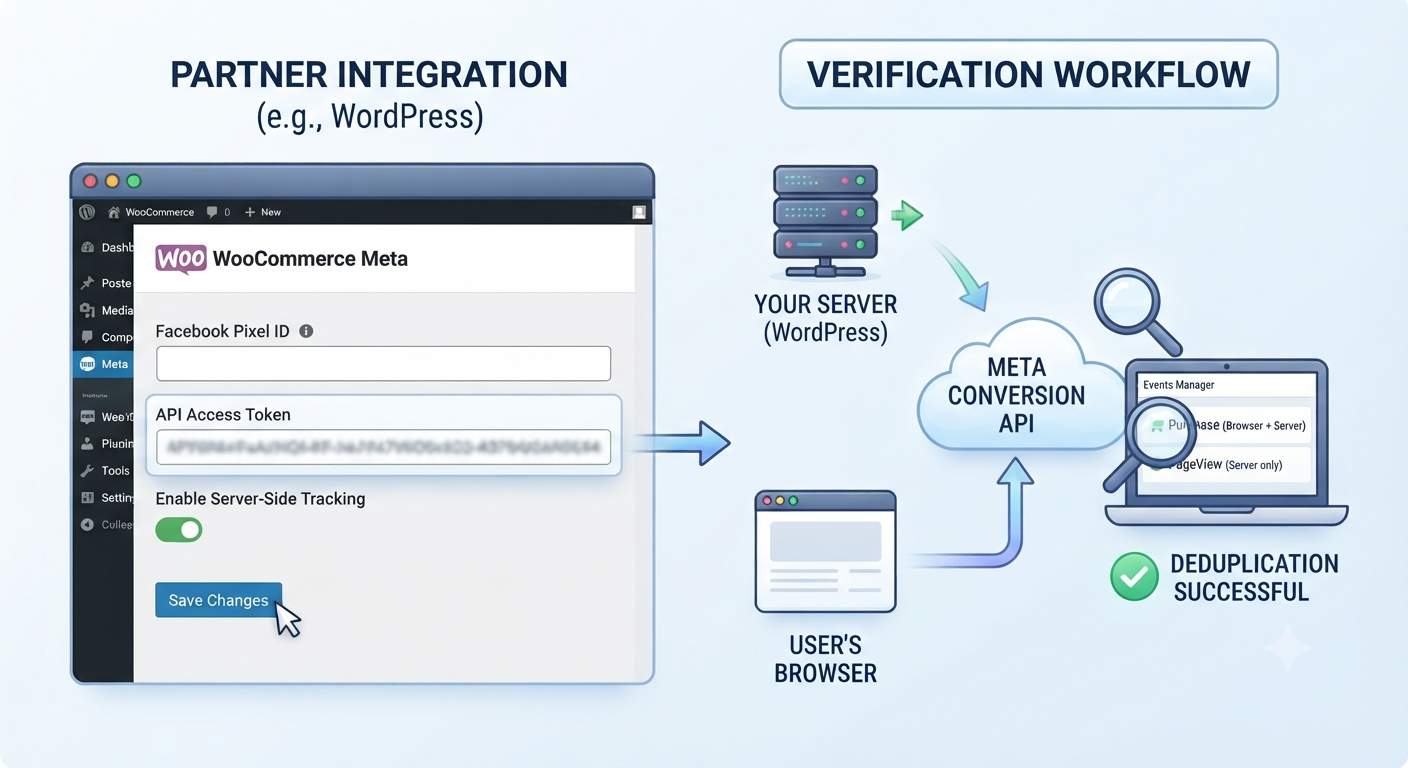
The Pixel is a small piece of tracking code installed on your website that records visitor activity such as page views, product views, add-to-cart actions, purchases, and other valuable customer interactions.
This information allows advertisers to measure campaign performance accurately while building highly targeted remarketing audiences.
Without proper tracking, businesses lose valuable optimization opportunities and struggle to understand which campaigns generate actual revenue.
Connect Your Product Catalogue
E-commerce businesses should connect their product catalogue to Meta Commerce Manager.
A synchronized catalogue automatically updates product information, pricing, availability, and images. This enables Dynamic Product Ads, simplifies campaign creation, and ensures customers always see accurate product details.
Keeping product information synchronized also reduces manual work while improving campaign efficiency.
Define Clear Campaign Objectives
Every campaign should begin with a clearly defined objective.
Some businesses focus on increasing website traffic, while others prioritize conversions, catalogue sales, lead generation, or brand awareness.
Choosing the correct objective helps Facebook’s algorithm optimize delivery toward users most likely to complete the desired action.
Campaign goals should align with overall business objectives rather than simply generating clicks.
Set a Realistic Budget
Successful advertising does not always require large investments.
Businesses should begin with a manageable daily or lifetime budget, allowing enough time for Facebook’s learning phase before making significant adjustments.
Instead of constantly changing budgets, gradual scaling based on proven campaign performance produces more stable results.
Monitoring Return on Ad Spend, Cost Per Purchase, and Conversion Value provides better decision-making than focusing solely on click costs.
Create High-Converting Ad Creatives
Creative quality often determines whether users stop scrolling or ignore an advertisement.
Professional product photography, engaging videos, compelling headlines, and customer-focused messaging work together to capture attention and encourage action.
Every advertisement should clearly explain how the product solves a problem, improves daily life, or delivers value to customers.
Strong calls to action such as “Shop Now,” “Learn More,” or “Get Started” guide users toward the next step without creating confusion.
Launch, Monitor, and Optimize
Publishing an advertisement is only the beginning.
Successful advertisers regularly review campaign performance, analyze audience behaviour, compare creative variations, and optimize bidding strategies.
A/B testing different headlines, visuals, audiences, and landing pages helps identify the combinations that generate the highest conversions.
Continuous optimization transforms average campaigns into profitable long-term marketing assets. Businesses that consistently analyze data and make informed improvements often outperform competitors that rely on guesswork or one-time campaign setups.
Facebook advertising rewards patience, testing, and ongoing learning. As campaigns collect more data, Meta’s optimization algorithms become more effective, helping businesses acquire customers more efficiently while improving long-term profitability.
Best Targeting Strategies
Even the most visually appealing advertisement will struggle to generate sales if it reaches the wrong audience. One of the biggest reasons businesses succeed with Facebook advertising is its advanced targeting capabilities. Rather than displaying advertisements to everyone, businesses can focus on people who are most likely to engage with their products and become loyal customers.
Understanding your ideal customer should always be the starting point. Consider who they are, what problems they face, what products they buy, and how they spend time online. When your targeting aligns with customer intent, your campaigns become more relevant and cost-effective.
Interest-Based Targeting
Interest targeting allows businesses to reach users based on their hobbies, lifestyle, online behavior, and activities across Meta platforms. For example, a fashion retailer can target users interested in clothing brands, online shopping, beauty products, and fashion influencers. A fitness equipment store can focus on people interested in exercise, healthy living, gyms, and sports.
Although interest targeting is excellent for reaching new audiences, it works best when combined with compelling ad creatives and clear messaging that speaks directly to the audience’s needs.
Custom Audiences
Custom Audiences help businesses reconnect with people who have already interacted with their brand. These audiences can include website visitors, previous customers, email subscribers, mobile app users, or individuals who have engaged with Facebook or Instagram content.
Since these users are already familiar with your business, they are more likely to convert than completely new prospects. This makes Custom Audiences one of the highest-performing targeting options for online stores.
Lookalike Audiences
Lookalike Audiences enable Facebook to identify new users who share similar characteristics with your existing customers. Meta analyzes purchasing behavior, interests, demographics, and online activity to find people who resemble your most valuable audience.
This strategy helps businesses scale successfully without sacrificing campaign quality. Instead of guessing who may be interested, advertisers rely on Facebook’s data-driven algorithms to discover high-potential customers.
Website Retargeting
Most online shoppers do not make a purchase during their first visit. Some compare prices, others become distracted, and many simply need more time before making a decision.
Website retargeting helps recover these potential customers by displaying relevant advertisements after they leave your website. Someone who viewed a product yesterday may see that same product in their Facebook or Instagram feed today, encouraging them to return and complete the purchase.
Retargeting campaigns often deliver some of the highest conversion rates because they focus on users who have already expressed buying intent.
Customer List Targeting
Businesses with existing customer databases can securely upload email addresses or phone numbers to create highly targeted campaigns. This approach is useful for promoting new products, seasonal offers, loyalty rewards, or exclusive discounts to previous buyers.
Customer list targeting also supports upselling and cross-selling by introducing complementary products to existing customers, increasing their overall lifetime value.
The most successful advertisers combine several targeting methods rather than relying on a single audience. Testing different audience segments allows businesses to identify where the strongest return on investment comes from and refine future campaigns accordingly.
Best Practices for High-Converting Facebook Ads
Successful Facebook campaigns are built on continuous improvement rather than one-time setup. Businesses that consistently test, analyze, and optimize their advertisements achieve better results over time.
The first step is creating compelling ad copy that focuses on customer benefits instead of product features. Rather than simply describing a product, explain how it solves a problem or improves the customer’s life. Clear, conversational language helps users quickly understand the value being offered.
Visual content is equally important. High-quality product photography and engaging videos capture attention as users scroll through their feeds. Consistent branding, attractive colors, and professional presentation increase credibility while encouraging users to stop and learn more.
Every advertisement should include a clear call to action. Whether encouraging users to shop now, request a quote, book a consultation, or learn more, the next step should always be obvious. Strong calls to action reduce confusion and improve click-through rates.
Landing pages also play a major role in campaign success. When users click an advertisement, they should arrive on a page that matches the message they just saw. Fast loading speeds, mobile responsiveness, simple navigation, and secure checkout processes all contribute to higher conversion rates.
Testing should become part of every advertising strategy. Running multiple versions of headlines, images, videos, and audience segments allows businesses to identify which combinations produce the best results. Even small improvements in click-through rate or conversion rate can significantly increase overall profitability.
Regular performance reviews are equally important. Successful advertisers monitor campaign data, identify trends, pause underperforming advertisements, and allocate more budget to campaigns producing consistent returns.
Businesses that adopt a long-term optimization mindset generally outperform competitors who launch campaigns and leave them unchanged for weeks or months.
Common Mistakes to Avoid
Many businesses fail with Facebook advertising not because the platform is ineffective, but because they make avoidable mistakes during campaign planning and management.
One of the most common errors is targeting an audience that is either too broad or too narrow. Broad audiences often waste advertising budgets by reaching users with little purchasing intent, while overly narrow audiences restrict campaign reach and limit growth opportunities.
Another frequent mistake is ignoring the Meta Pixel. Without accurate conversion tracking, businesses cannot understand which advertisements generate sales or identify opportunities for optimization. Reliable data forms the foundation of successful decision-making.
Poor-quality creative content also reduces campaign performance. Blurry product images, low-resolution videos, inconsistent branding, or unclear messaging make advertisements less trustworthy and less likely to attract engagement.
Some advertisers focus only on generating clicks instead of measuring actual business outcomes. High traffic numbers may appear impressive, but if visitors do not purchase products or complete valuable actions, the campaign is not delivering meaningful results.
Failing to test multiple advertisements is another costly mistake. Customer preferences vary, and assumptions rarely outperform real performance data. Businesses should continually experiment with new headlines, visuals, offers, and audiences to discover what resonates most effectively.
Scaling campaigns too quickly can also reduce profitability. Increasing budgets dramatically before Facebook’s learning phase is complete often disrupts optimization and leads to inconsistent results. Gradual budget adjustments based on proven performance provide more stable growth.
Finally, neglecting campaign monitoring allows performance to decline over time. Consumer behavior, competition, and advertising costs constantly change. Regular optimization helps businesses adapt to these changes while maintaining strong returns on investment.
Facebook Ads Budget for E-commerce
One of the most common questions asked by online business owners is how much they should spend on Facebook advertising. The answer depends on business goals, competition, product pricing, and expected profit margins.
New advertisers should begin with a realistic daily budget that provides enough data for Facebook’s algorithm to learn. Starting small allows businesses to test audiences, creatives, and campaign objectives without taking unnecessary financial risks.
Instead of concentrating solely on advertising costs, businesses should evaluate overall profitability. A campaign that costs more per click may still generate better results if those visitors purchase higher-value products.
Several key performance indicators help measure advertising efficiency.
Cost Per Click indicates how much is paid each time someone clicks an advertisement. Lower click costs can be beneficial, but they should always be evaluated alongside conversion performance.
Cost Per Acquisition measures the amount spent to acquire one customer. This metric provides a clearer understanding of campaign profitability because it focuses on completed business objectives rather than simple website visits.
Return on Ad Spend, commonly known as ROAS, remains one of the most valuable performance metrics. It compares advertising investment with generated revenue, helping businesses determine whether campaigns are financially sustainable.
For example, if an online retailer spends $500 on advertising and generates $2,500 in sales, the campaign achieves a ROAS of 5:1. This indicates that every advertising dollar generated five dollars in revenue.
Businesses should review these metrics regularly and make data-driven decisions when adjusting budgets or expanding successful campaigns.
Measuring Success
Launching a campaign is only the beginning. Long-term success depends on measuring performance accurately and continuously improving results based on reliable data.
Click-Through Rate (CTR) measures how many people click an advertisement after seeing it. A higher CTR generally indicates that the creative content and messaging are relevant to the target audience.
Conversion Rate measures the percentage of visitors who complete a desired action, such as making a purchase, submitting a contact form, or requesting a quote. Improving landing pages and simplifying the buying process often leads to stronger conversion rates.
Return on Ad Spend remains one of the most important indicators because it directly connects advertising investment with generated revenue. Businesses should focus on sustainable profitability rather than simply increasing traffic or impressions.
Cost Per Purchase provides additional insight into customer acquisition efficiency. Lower acquisition costs allow businesses to scale advertising while maintaining healthy profit margins.
Customer Lifetime Value should also be considered when evaluating campaign performance. A customer who makes multiple purchases over several years is far more valuable than one who buys only once. Understanding long-term customer value helps businesses invest confidently in acquiring high-quality customers.
Successful Facebook advertising is not about chasing vanity metrics. It is about building campaigns that consistently generate profitable sales, strengthen customer relationships, and support sustainable business growth over time. Businesses that regularly analyze performance data and refine their strategies are far more likely to outperform competitors in today’s rapidly evolving digital marketplace.
Facebook Ads vs Google Ads for E-commerce
One of the most common questions online store owners ask is whether they should invest in Facebook Ads or Google Ads. The truth is that both platforms are highly effective, but they serve different purposes within the customer journey.
Facebook Ads focus on demand generation. Instead of waiting for people to search for a product, Facebook introduces products to users based on their interests, behaviors, demographics, and online activity. This makes it an excellent platform for increasing brand awareness, launching new products, promoting seasonal offers, and encouraging impulse purchases.
Google Ads, on the other hand, focus on demand capture. People using Google are actively searching for products, services, or solutions. Their purchase intent is often higher because they already know what they need. This makes Google Ads particularly effective for businesses targeting transactional keywords and ready-to-buy customers.
For an e-commerce business, the strongest strategy is not choosing one platform over the other but combining both. Facebook Ads help create awareness and introduce potential customers to your brand, while Google Ads capture those customers when they begin searching for specific products. Together, they create a complete digital marketing funnel that increases visibility, builds trust, and improves conversion rates.
Businesses offering professional services can also benefit from this combined approach. For example, K4 Security Services can use Facebook Ads to promote awareness of SIA training courses and use Google Search campaigns to reach users actively searching for security training providers in the UK. Integrating both channels creates multiple touchpoints that strengthen brand recognition and increase enquiries.
Future Trends in Facebook Ads
The digital advertising landscape continues to evolve, and businesses that adapt early often gain a competitive advantage. Meta is investing heavily in artificial intelligence, automation, and machine learning to improve campaign performance and simplify campaign management.
AI-powered optimization is becoming more advanced every year. Meta’s algorithms can automatically identify high-performing audiences, optimize bidding strategies, and deliver advertisements to users who are most likely to convert. This allows businesses to focus more on creating valuable content while relying on automation for campaign delivery.
Personalization will continue to shape the future of online advertising. Consumers increasingly expect advertisements that reflect their interests, shopping habits, and previous interactions. Businesses that create highly relevant and personalized campaigns are more likely to achieve stronger engagement and higher conversion rates.
Video-first marketing is another growing trend. Short-form videos, product demonstrations, customer testimonials, and behind-the-scenes content consistently generate strong engagement across Facebook and Instagram. Investing in professional video content will become increasingly important as user preferences continue shifting toward visual experiences.
Advantage+ Shopping Campaigns are also transforming e-commerce advertising. These campaigns use Meta’s artificial intelligence to automate audience targeting, creative testing, and budget allocation. As the technology continues improving, businesses can expect more efficient campaign management and stronger returns on investment.
Privacy changes are influencing digital advertising as well. With increasing restrictions on third-party tracking, businesses should focus on collecting first-party customer data through email marketing, website registrations, loyalty programs, and customer relationship management systems. Building strong customer relationships will become even more valuable in the years ahead.
Keeping pace with these developments allows businesses to remain competitive while continuously improving advertising performance.
Conclusion
Facebook advertising has become one of the most effective digital marketing channels for online businesses looking to increase visibility, attract qualified customers, and generate consistent sales. Its advanced audience targeting, powerful automation, flexible budgeting, and detailed performance reporting make it suitable for businesses of every size.
Success does not come from simply launching advertisements. It comes from understanding your audience, creating compelling content, testing different strategies, analyzing campaign data, and making continuous improvements based on real performance.
Businesses that combine strong branding, professional creatives, optimized landing pages, and data-driven decision-making are better positioned to achieve long-term growth. As Meta continues introducing new AI-powered features and automation tools, advertisers who embrace innovation while focusing on customer experience will remain ahead of the competition.
Whether you are launching a new online store or scaling an established e-commerce brand, investing in a well-planned Facebook advertising strategy can become one of the most profitable decisions for your business.
Frequently Asked Questions
What is the ideal budget for Facebook advertising?
There is no fixed budget that works for every business. Start with an amount you can comfortably test, evaluate campaign performance, and gradually increase investment once profitable campaigns have been identified.
How long does it take to see results?
Many campaigns begin generating useful performance data within the first few days. However, achieving consistent profitability often requires several weeks of testing, optimization, and audience refinement.
Are Facebook advertisements suitable for small businesses?
Yes. Facebook provides flexible budgeting options, allowing startups and small businesses to compete effectively without requiring large advertising investments.
Which advertisement format generates the highest conversions?
The best format depends on your products and objectives. Dynamic Product Ads, Carousel Ads, and Video Ads generally perform exceptionally well for e-commerce businesses because they showcase products in engaging and personalized ways.
Is the Meta Pixel necessary?
Yes. Installing the Meta Pixel allows businesses to track conversions, build remarketing audiences, measure campaign performance, and improve advertising optimization.
Can Facebook advertising increase repeat purchases?
Absolutely. Remarketing campaigns, customer list targeting, and personalized product recommendations encourage existing customers to return and make additional purchases.
How often should campaigns be optimized?
Campaigns should be reviewed regularly. Weekly performance analysis helps identify opportunities for improvement while ensuring advertising budgets continue generating profitable results.
Does Facebook advertising work together with SEO?
Yes. Search engine optimization helps customers discover your business through search engines, while paid social advertising introduces your brand to new audiences. Combining both strategies creates stronger online visibility and sustainable business growth.
Ready to Grow Your Business?
Building profitable advertising campaigns requires more than simply boosting posts. It demands strategic planning, audience research, compelling creatives, conversion-focused landing pages, and continuous optimization.
At Bhatti Marketing, we help businesses create high-performing digital marketing campaigns that generate measurable results. From Facebook Ads and Google Ads to SEO, web development, content marketing, and conversion optimization, our team develops tailored strategies that support long-term business growth.
If you’re ready to increase sales, attract qualified customers, and improve your online presence, our specialists are here to help.
We also invite you to explore our Case Studies to see how our digital marketing strategies have helped businesses improve traffic, generate leads, and achieve sustainable growth across competitive industries.
Contact Bhatti Marketing today and discover how a data-driven marketing strategy can help your business reach the next level.