Small Business Startup Guide for Beginners

Small Business Investment Ideas for 2026 Success
Summary
Learn how to start and grow a profitable small business with practical ideas, planning tips, branding strategies, and marketing techniques for beginners and entrepreneurs.
Introduction
Starting a business has become one of the smartest ways to create financial independence and long-term stability. Many people dream of becoming their own boss, but they often struggle because they do not know where to begin. This is why understanding step by step small business ideas is important for beginners who want practical and profitable business opportunities.
Today, small businesses are growing rapidly because online platforms, digital marketing, and affordable technology have made entrepreneurship easier than ever before. Whether you want to start an online store, offer services, launch a local business, or create a personal brand, success becomes easier when you follow a clear process.
This guide explains everything in simple language so beginners can understand how to choose the right business idea, plan effectively, market their services, and grow steadily. The strategies shared here are practical, easy to follow, and written from a real-world business perspective.
What Are Small Business Ideas?
Small business ideas are business opportunities that require manageable investment, limited staff, and simple operations during the beginning stage. These businesses are ideal for students, freelancers, professionals, and anyone who wants additional income or long-term business growth.
A small business can be online, offline, or a combination of both. Some businesses focus on products, while others focus on services. The best business ideas solve real customer problems and create value in the market.
Examples include digital marketing agencies, clothing brands, food delivery services, online tutoring, graphic design, security services, cleaning businesses, and e-commerce stores.
The most successful entrepreneurs start with one simple idea and gradually improve it through experience, customer feedback, and consistent effort.
Why Starting a Small Business Is Important Today
The business world has changed dramatically in recent years. Traditional jobs are no longer the only path to financial growth. People now prefer flexible work opportunities, online businesses, and independent income sources.
Small businesses allow individuals to control their earnings, build personal brands, and create long-term wealth. They also provide freedom to work on projects you genuinely enjoy.
In countries like Pakistan, the demand for local products, digital services, delivery businesses, and online shopping is increasing rapidly. This creates excellent opportunities for entrepreneurs who are ready to start smart and stay consistent.
Businesses also help communities by creating employment opportunities and supporting economic growth.
Benefits of Step-by-Step Business Planning
Many businesses fail because owners start without planning. A step-by-step strategy reduces confusion and helps entrepreneurs make better decisions.
Planning gives you clarity about your target audience, expenses, competition, and business goals. It also helps you avoid unnecessary risks and financial losses.
When you build your business gradually, you can improve operations over time instead of making expensive mistakes at the beginning.
Good planning also improves confidence because you know exactly what actions to take next.
Step 1: Choose the Right Business Idea
The first and most important step is choosing a business idea that matches your skills, interests, and market demand.
Many people copy trends without understanding customer needs. This creates problems later because they lack passion and knowledge about the business.
Start by asking yourself simple questions. What skills do you already have? What services can you provide confidently? Problems can you solve for customers?
If you enjoy creativity, you can start a graphic design or content writing business. If you like technology, digital marketing or web development may be better choices. People interested in products can explore clothing brands, beauty items, or electronics.
The best business ideas usually combine passion, market demand, and profit potential.
Step 2: Research Your Target Market
Market research helps you understand customers and competitors before investing money.
You should know who your ideal customers are, what they need, and how much they are willing to pay. Research also helps identify gaps in the market where your business can stand out.
Analyze competitors carefully. Visit their websites, study their pricing, read customer reviews, and observe their marketing strategies.
This process helps you improve your own business model and create better customer experiences.
Step 3: Create a Simple Business Plan
A business plan does not need to be overly complicated. Even a simple plan can guide your business effectively.
Your plan should include business goals, target audience, startup budget, marketing strategy, and expected income.
You should also define your unique selling point. Ask yourself why customers should choose your business over competitors.
For example, if your business offers faster delivery, affordable pricing, professional support, or premium quality, make it part of your brand identity.
A business plan also helps you stay focused during difficult periods.
Step 4: Register and Set Up Your Business
Professional businesses build trust faster. Choose a memorable business name that reflects your services clearly.
Create professional social media profiles and a business website. Today, customers search online before purchasing products or services. A strong online presence increases credibility and visibility.
You should also consider legal registration depending on your business type and local regulations.
Businesses that operate professionally attract more customers and partnerships.
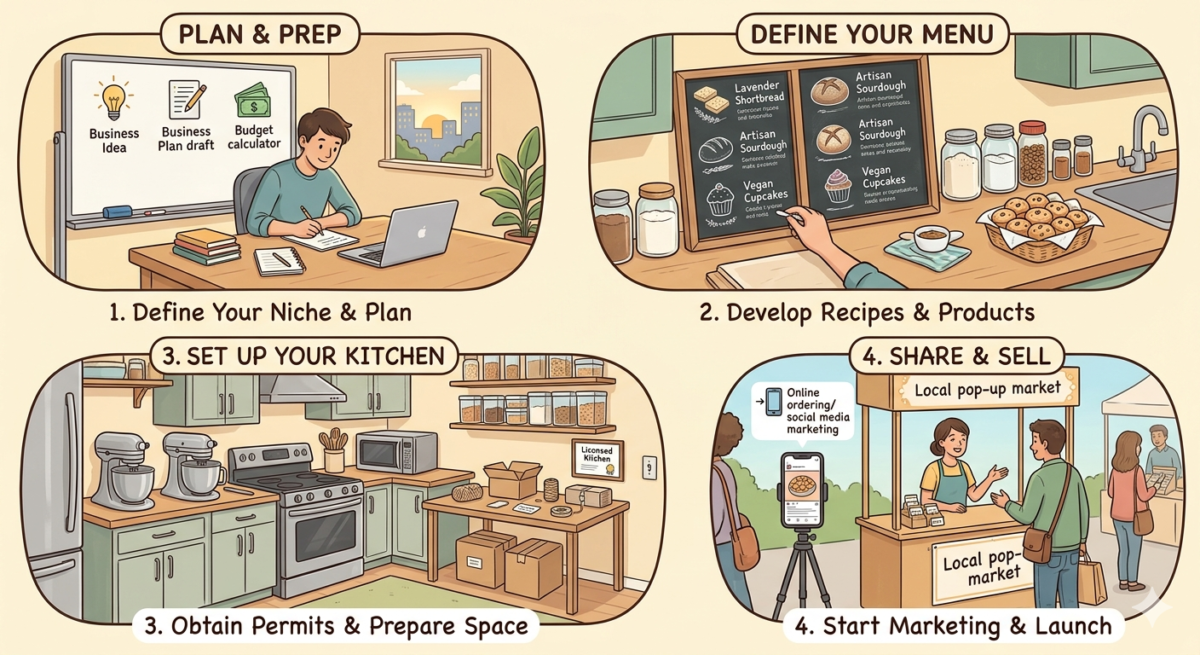
Step 5: Start with Low Investment
One common mistake beginners make is overspending at the beginning.
Successful businesses often start small and grow gradually. You do not need a luxury office or expensive equipment during the early stage.
Focus only on essential tools and resources. Use free or affordable marketing platforms like Facebook, Instagram, TikTok, WhatsApp Business, and Google Business Profile.
Home-based businesses are especially useful for reducing operational costs.
The goal during the beginning is learning, improving, and building customer trust.
Step 6: Build Your Brand Identity
Branding is more than just a logo. It represents how customers feel about your business.
Professional branding creates trust, recognition, and emotional connection with customers.
Your business should have consistent colors, messaging, tone, and customer experience across all platforms.
Businesses that communicate professionally often gain more loyal customers.
For example, if you run a security services company, your branding should communicate trust, professionalism, safety, and reliability.
Strong branding also helps businesses stand out in competitive markets.
Step 7: Promote Your Small Business
Marketing is essential for business growth. Even the best products fail without proper promotion.
Digital marketing is one of the most effective ways to attract customers today. Businesses should focus on SEO, social media marketing, content marketing, and local search optimization.
Search engine optimization helps websites rank on Google and appear in AI Overviews. To achieve this, content should answer user questions clearly and naturally.
High-ranking content usually includes:
- Clear headings and subheadings
- Easy-to-read paragraphs
- Helpful information
- Conversational language
- Relevant keywords naturally
- Real-world examples
- Strong user intent matching
Google now prioritizes helpful content that solves problems instead of keyword stuffing.
For businesses like K4 Security, creating educational blogs about security training, CCTV systems, workplace safety, and SIA courses can improve authority and search rankings.
Consistent content publishing also builds topical authority over time.
Step 8: Manage Daily Operations
Daily operations determine long-term business success.
Business owners should track expenses, customer communication, orders, and inventory regularly.
Good organization improves productivity and customer satisfaction.
Using digital tools for accounting, communication, and scheduling can save time and reduce mistakes.
Quick responses and professional customer support also improve reputation significantly.
Step 9: Grow Your Business Step by Step
Business growth takes patience and consistency.
Instead of expanding too quickly, focus on improving customer satisfaction and operational quality first.
Satisfied customers often recommend businesses to others through word-of-mouth marketing.
As revenue grows, businesses can expand services, hire employees, improve branding, and invest in better marketing strategies.
Scaling gradually creates more stable and sustainable growth.
Common Mistakes to Avoid
Many businesses struggle because owners ignore important fundamentals.
Lack of planning is one of the biggest mistakes. Businesses also fail when owners neglect customer service or stop marketing after initial sales.
Another common issue is poor financial management. Mixing personal and business expenses creates confusion and reduces profitability.
Some entrepreneurs expect instant success and lose motivation too quickly. Real business growth requires consistency, learning, and adaptation.
Avoid comparing your beginning with someone else’s success story. Focus on steady improvement instead.
Best Small Business Ideas in 2026
The business landscape continues evolving every year. Some industries are growing faster due to technology and changing customer behavior.
Digital marketing services remain highly profitable because businesses constantly need online visibility.
E-commerce stores are also growing rapidly as online shopping becomes more popular worldwide.
Food delivery businesses, customized clothing brands, content creation services, freelance businesses, online tutoring, and security services are expected to perform strongly in 2026.
Businesses that combine convenience, technology, and customer experience usually perform best.
FAQs
Which small business is best for beginners?
Online businesses like freelancing, digital marketing, content writing, and e-commerce are excellent options for beginners because they require lower investment and flexible operations.
How much investment is needed to start a small business?
The investment depends on the business type. Many online businesses can start with minimal investment using free digital tools and social media platforms.
Can I start a business from home?
Yes, many businesses operate successfully from home, including online stores, consultancy services, freelancing, tutoring, and content creation.
Which online business is most profitable?
Digital marketing agencies, e-commerce businesses, online education, web development, and content creation services are among the most profitable online business models today.
How can small businesses attract customers quickly?
Businesses can attract customers through SEO, social media marketing, Google Business Profile optimization, referral marketing, and excellent customer service.
Conclusion
Building a successful business takes planning, patience, and continuous improvement. Entrepreneurs who follow practical strategies and focus on customer needs usually achieve long-term success.
The modern business environment offers endless opportunities for people willing to learn and take action. Whether you want financial freedom, career growth, or personal satisfaction, starting a small business can become a life-changing decision.
The key is to start small, stay consistent, and improve every step of the journey.