Dynamic Product Ads Guide: Complete Marketing Strategy
Facebook Ads Trends for 2026: Complete Guide
Introduction
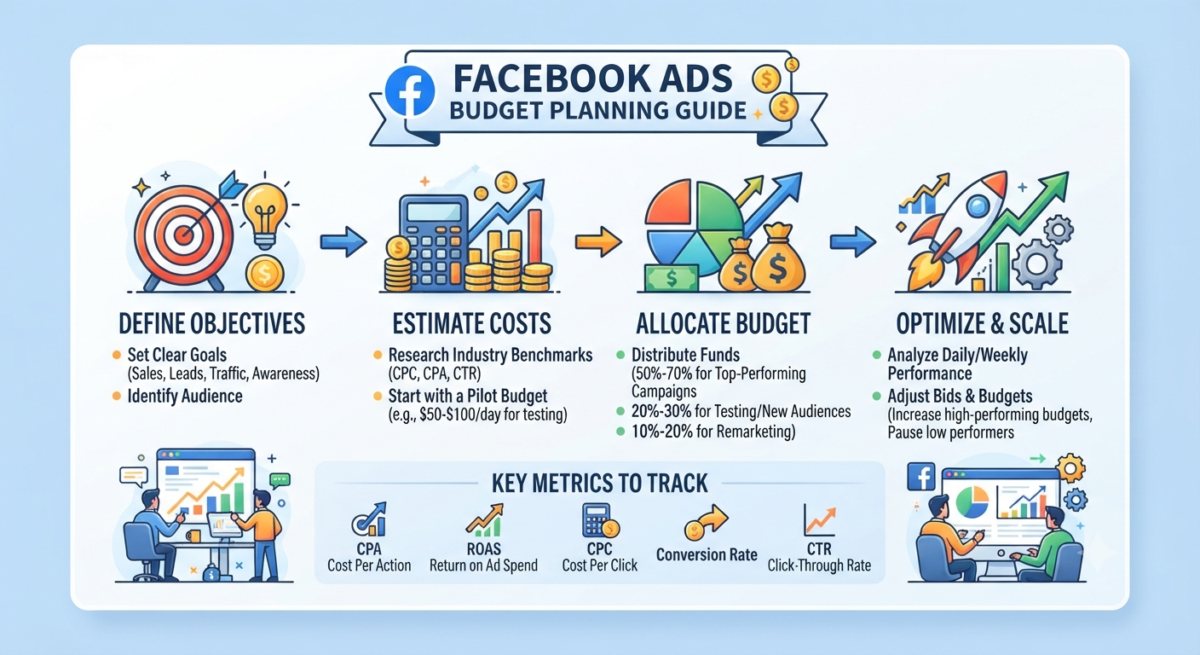
Facebook Ads Budget Planning is one of the most important factors behind a successful advertising campaign. Many businesses believe that spending more money automatically leads to better results. In reality, smart budget planning often outperforms large advertising budgets. Whether you’re a startup, local business, or established company, understanding how to allocate your advertising spend can significantly improve your return on investment.
Every dollar invested in Facebook advertising should have a purpose. A well-planned budget allows you to reach the right audience, generate quality leads, increase sales, and continuously improve campaign performance without overspending. Businesses that monitor their budgets carefully are more likely to identify profitable campaigns, pause underperforming ads, and scale winning strategies at the right time.
Facebook’s advertising platform offers advanced optimization features that help advertisers distribute budgets effectively. However, these tools only deliver the best results when combined with a strategic budgeting approach. Setting realistic goals, understanding campaign objectives, and monitoring performance metrics all contribute to long-term advertising success.
In this comprehensive guide, you’ll learn how Facebook advertising budgets work, the different budgeting options available, and practical methods for planning campaigns that maximize results while minimizing unnecessary costs.
What Is Facebook Ads Budget Planning?
Facebook Ads Budget Planning is the process of determining how much money should be invested in advertising campaigns based on business goals, target audience, expected return on investment, and campaign objectives. Instead of randomly selecting a budget, advertisers create a structured spending strategy that supports measurable marketing outcomes.
A proper budget plan considers every stage of the customer journey. Businesses must evaluate how much it costs to generate website traffic, collect leads, increase brand awareness, or drive online purchases. These estimates help marketers predict campaign performance before investing significant advertising funds.
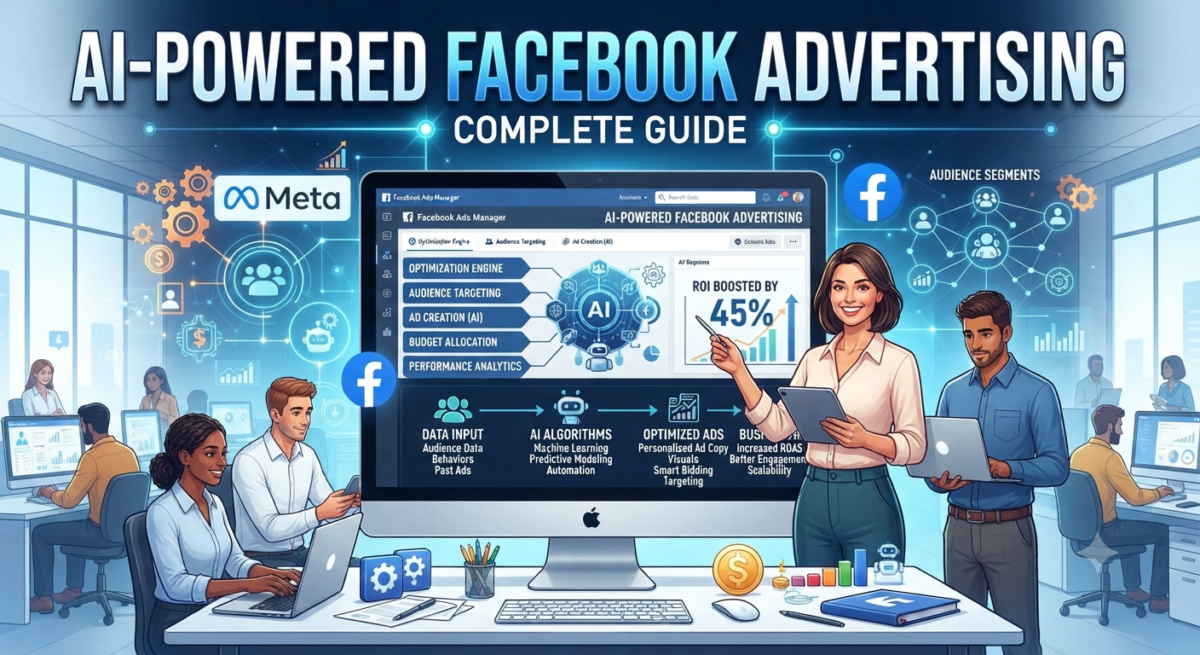
Facebook’s advertising system uses machine learning to optimize budget allocation based on campaign objectives. As campaigns collect data, the platform automatically delivers ads to users who are more likely to complete the desired action. This optimization becomes more effective when advertisers provide enough budget and time for the learning phase to complete.
Successful advertisers also review historical campaign data before creating new budgets. Previous conversion costs, click-through rates, audience engagement, and seasonal trends provide valuable insights that help determine realistic spending levels for future campaigns.
Budget planning should never be viewed as a one-time task. Market conditions, audience behavior, competition, and advertising costs constantly change. Regular performance reviews ensure budgets remain aligned with current business goals and maximize overall campaign efficiency.
Why Budget Planning Is Important
Many businesses struggle with Facebook advertising because they focus only on creating attractive ads while ignoring budget strategy. Without proper planning, campaigns may spend money too quickly, target the wrong audience, or fail to generate enough data for Facebook’s optimization system.
A well-planned advertising budget creates stability throughout the campaign. Instead of making emotional decisions based on daily fluctuations, marketers follow a structured strategy supported by measurable performance indicators.
One of the biggest advantages of effective budget planning is improved return on investment. Every campaign objective requires different spending levels. Brand awareness campaigns typically cost less than lead generation or conversion campaigns because they target different stages of the buying process. Understanding these differences allows businesses to allocate budgets where they produce the greatest impact.
Strategic budgeting also reduces wasted advertising spend. Underperforming audiences, ineffective creatives, and low-converting placements can be identified quickly, allowing advertisers to redirect funds toward better-performing campaigns.
Another important benefit is scalability. Businesses that monitor campaign performance consistently can gradually increase budgets without disrupting Facebook’s optimization process. This approach allows advertisers to expand successful campaigns while maintaining profitability.
Proper budget planning also improves forecasting. Marketing teams can estimate monthly advertising expenses, expected conversions, customer acquisition costs, and overall revenue with greater accuracy, making business growth more predictable.
Types of Facebook Ad Budgets
Facebook offers several budgeting methods designed to support different campaign objectives. Understanding how each option works helps advertisers choose the most effective strategy for their marketing goals.
Daily Budget
A daily budget sets the average amount Facebook can spend each day on a campaign or ad set. While actual daily spending may fluctuate slightly, Facebook balances these variations over time to maintain the average budget.
Daily budgets work well for businesses running continuous campaigns, generating consistent leads, or maintaining ongoing brand awareness. They also provide flexibility because advertisers can adjust budgets at any time based on campaign performance.
Many local businesses prefer daily budgets because they offer predictable spending and simplify monthly financial planning.
Lifetime Budget
A lifetime budget defines the total amount Facebook can spend during the entire campaign duration. Instead of distributing spending evenly every day, Facebook automatically allocates more budget during periods when better results are expected.
Lifetime budgets are particularly effective for seasonal promotions, product launches, limited-time offers, and event-based campaigns. They allow Facebook’s algorithm to optimize spending based on audience activity and expected conversion opportunities.
Businesses running holiday sales or promotional events often achieve better efficiency using lifetime budgets because Facebook increases delivery during high-performing periods.
Campaign Budget Optimization (CBO)
Campaign Budget Optimization allows Facebook to manage the budget across multiple ad sets automatically. Instead of assigning fixed budgets to each audience, the platform shifts spending toward the ad sets delivering the best results.
This feature reduces manual budget management and helps advertisers maximize conversions while minimizing wasted spend. As campaign performance changes, Facebook continually reallocates funds to improve overall efficiency.
CBO is especially useful for advertisers testing multiple audiences, interests, demographics, or creative variations within the same campaign.
Ad Set Budget Optimization (ABO)
Ad Set Budget Optimization gives advertisers complete control over individual ad set budgets. Each audience receives a fixed budget regardless of how other audiences perform.
ABO is commonly used during testing phases because marketers can compare audience performance without Facebook automatically shifting the budget. Once winning audiences are identified, many advertisers transition to Campaign Budget Optimization for easier scaling.
Choosing between CBO and ABO depends largely on campaign objectives, testing requirements, and the level of manual control desired. Experienced advertisers often combine both approaches at different stages of campaign management.
Factors That Affect Your Facebook Ads Budget
No two Facebook advertising campaigns cost exactly the same. Even if two businesses promote similar products, their budgets can differ based on audience behavior, competition, campaign objectives, and market demand. Understanding these factors allows advertisers to create realistic budgets and avoid unexpected spending.
A successful budget plan is built on data rather than assumptions. Before launching a campaign, evaluate the following elements that directly influence advertising costs and overall campaign performance.
Business Goals
Your advertising objective is the foundation of your budget. Every goal requires a different investment because Facebook optimizes campaigns according to the action you want users to take.
For example, a brand awareness campaign usually costs less because Facebook focuses on showing ads to as many relevant people as possible. On the other hand, campaigns designed to generate leads, online purchases, or appointment bookings generally require a larger budget since Facebook targets users who are more likely to convert.
Businesses should clearly define success before setting a budget. Whether the objective is website traffic, lead generation, app installs, or eCommerce sales, knowing the desired outcome helps estimate realistic advertising costs.
Target Audience Size
Audience size significantly impacts advertising expenses. A broad audience provides Facebook with more opportunities to find lower-cost impressions, while a highly specific audience often increases competition and advertising costs.
Targeting users based on age, interests, job titles, income, or purchasing behavior narrows the audience pool. Although this can improve lead quality, it may also increase the average cost per click and cost per conversion.
The ideal strategy is to begin with a well-defined audience that is large enough for Facebook’s algorithm to optimize effectively. As campaign data grows, audience segments can be refined based on actual performance.
Industry Competition
Some industries naturally have higher advertising costs because multiple businesses compete for the same audience.
Industries such as finance, insurance, healthcare, legal services, education, software, and real estate often experience higher cost-per-click rates due to intense competition. Businesses in these sectors should plan larger budgets to remain competitive.
Companies operating in niche markets with fewer advertisers may achieve excellent results with smaller advertising investments.
Geographic Location
Advertising costs vary depending on where your audience is located.
Campaigns targeting major cities or highly competitive countries generally require higher budgets because more advertisers compete for user attention. Advertising in local markets or smaller regions may produce lower costs while maintaining strong conversion rates.
Businesses serving multiple regions should monitor performance separately for each location and allocate budgets according to profitability rather than distributing spending equally.
Campaign Objective
Facebook offers several campaign objectives, and each uses a different optimization strategy.
Traffic campaigns typically generate lower-cost clicks but may produce fewer conversions. Conversion campaigns focus on users who are most likely to complete valuable actions, often requiring a larger investment. Engagement campaigns prioritize likes, comments, and shares, while video view campaigns optimize for watch time.
Selecting the right objective ensures your budget supports meaningful business results rather than vanity metrics.
Ad Placement
Facebook automatically delivers ads across multiple placements, including Facebook Feed, Instagram Feed, Stories, Reels, Messenger, and Audience Network.
Some placements generate lower costs but weaker engagement, while others produce higher-quality conversions despite costing more. Monitoring placement performance allows advertisers to move budgets toward channels delivering the strongest return.
Automatic placements often provide the best starting point because Facebook’s algorithm identifies the most efficient opportunities based on campaign goals.
Seasonality
Advertising demand changes throughout the year.
Events such as Black Friday, Cyber Monday, Christmas, New Year, Ramadan, Eid, Valentine’s Day, and back-to-school seasons increase advertiser competition, leading to higher costs.
Businesses should prepare larger advertising budgets during these periods while expecting improved conversion opportunities due to increased consumer buying intent.
How to Calculate Your Facebook Ads Budget
One of the biggest mistakes advertisers make is choosing an advertising budget without using actual business data. Instead of guessing, businesses should calculate budgets using measurable goals and expected conversion rates.
A structured budgeting process improves forecasting and helps campaigns remain profitable.
Step 1: Define Your Marketing Goal
Start by identifying exactly what success looks like.
If your objective is lead generation, determine how many qualified leads you need each month. If you operate an online store, estimate the number of monthly sales required to reach your revenue target.
Clear objectives provide the foundation for every budget decision.
Step 2: Estimate Your Conversion Rate
Review historical campaign data or website analytics to estimate how many visitors typically convert into customers.
For example, if your landing page converts 5% of visitors into leads, every 100 website visitors may generate approximately five inquiries.
Knowing this percentage helps estimate how much traffic your campaign needs.
Step 3: Estimate Your Cost Per Click
Average Facebook advertising costs vary depending on industry and competition.
Suppose your average cost per click is $0.80 and you require 2,000 website visitors each month.
2,000 visitors × $0.80 = $1,600 estimated monthly advertising budget.
Although actual costs fluctuate, this calculation provides a practical starting point.
Step 4: Estimate Customer Acquisition Cost
Your customer acquisition cost measures how much advertising spend is required to gain one paying customer.
For example:
Monthly Ad Spend: $2,000
Customers Acquired: 50
Customer Acquisition Cost = $40
Understanding this number allows businesses to determine whether campaigns remain profitable over time.
Step 5: Monitor and Optimize
Budget planning doesn’t stop after launching a campaign.
Successful advertisers review performance every week, analyzing click-through rates, conversion rates, cost per result, return on ad spend, and audience engagement.
Rather than increasing budgets immediately, optimize creative assets, landing pages, and audience targeting before scaling campaigns.
Consistent optimization usually delivers better long-term profitability than simply spending more money.
Budget Planning for Different Business Sizes
Every business has different advertising needs. A startup launching its first campaign requires a completely different strategy than an established company managing multiple product lines.
Choosing the right budget depends on available resources, growth goals, and expected return on investment.
| Business Size | Primary Goal | Recommended Starting Budget | Best Strategy |
|---|---|---|---|
| Small Business | Brand awareness and lead generation | Start with a manageable daily budget and focus on one objective | Test audiences and creatives before increasing spend |
| Medium Business | Consistent lead generation and sales | Allocate separate budgets for prospecting and retargeting campaigns | Scale winning campaigns gradually using performance data |
| Large Enterprise | Revenue growth and market expansion | Invest across multiple campaign objectives and audience segments | Use advanced optimization, automation, and continuous A/B testing |
Small Businesses
Small businesses should avoid spreading limited budgets across too many campaigns.
Instead, focus on one clear objective, such as generating local leads or driving website traffic. Testing a few audience groups and creative variations provides valuable insights without exhausting the budget.
Consistency is more important than spending large amounts during the early stages.
Medium Businesses
Medium-sized businesses usually have enough marketing data to make informed budget decisions.
Instead of running only one campaign, they can separate budgets for new customer acquisition, remarketing, seasonal promotions, and product-specific advertising.
Performance data should guide future budget increases rather than assumptions or short-term trends.
Large Enterprises
Large organizations often manage multiple campaigns simultaneously across different regions, customer segments, and product categories.
Advanced budget planning includes automated rules, campaign budget optimization, detailed attribution analysis, and continuous performance monitoring.
Rather than focusing only on reducing advertising costs, enterprise advertisers prioritize long-term profitability, customer lifetime value, and sustainable growth.
Tips to Optimize Your Facebook Ads Budget
Managing your advertising budget effectively is just as important as choosing the right audience or creating compelling ad creatives. Many campaigns fail because advertisers increase spending without first improving performance. Budget optimization focuses on getting the maximum value from every dollar spent while maintaining consistent campaign results.
The most successful advertisers continuously analyze campaign data, test new ideas, and make informed adjustments based on performance metrics instead of assumptions.
Start Small and Scale Gradually
Launching a campaign with a massive budget is rarely the best strategy. Facebook’s algorithm needs time to learn how users interact with your advertisements. Starting with a reasonable budget allows the platform to collect data while minimizing unnecessary spending.
Once campaigns consistently generate profitable results, increase the budget gradually rather than making dramatic changes. Small increases help maintain campaign stability and prevent the learning phase from restarting.
Test Multiple Ad Creatives
Even when targeting the same audience, different images, videos, headlines, and ad copy can produce significantly different results.
Running A/B tests helps identify the creatives that generate the highest click-through rates and conversions. Once winning advertisements are identified, allocate a larger portion of the budget to those high-performing assets.
Creative testing should be an ongoing process because audience preferences change over time.
Focus on High-Quality Audiences
Reaching more people does not always mean achieving better results.
Instead of targeting everyone, build audiences based on customer behavior, interests, demographics, website visitors, and previous purchasers. High-quality audiences usually generate stronger engagement, lower acquisition costs, and better return on investment.
Remarketing campaigns are particularly effective because they target users who have already interacted with your business.
Monitor Performance Metrics Regularly
Successful advertisers review campaign performance consistently instead of waiting until the campaign ends.
Key performance indicators such as click-through rate, conversion rate, cost per conversion, return on ad spend, frequency, and engagement rate provide valuable insights into campaign health.
If performance begins to decline, investigate the cause before increasing the budget.
Refresh Advertisements Frequently
Ad fatigue occurs when users repeatedly see the same advertisement. As frequency increases, engagement often declines while advertising costs rise.
Updating visuals, headlines, descriptions, and calls to action keeps campaigns fresh and improves long-term performance.
Regular creative updates also give Facebook additional opportunities to optimize delivery.
Invest in Retargeting Campaigns
Retargeting remains one of the highest-performing Facebook advertising strategies.
Instead of focusing only on attracting new visitors, allocate part of your budget to users who have already visited your website, viewed products, watched videos, or interacted with previous advertisements.
These audiences already recognize your brand, making them more likely to convert.
Common Facebook Ads Budget Mistakes to Avoid
Many advertisers lose money because of avoidable budgeting mistakes rather than poor products or services. Recognizing these errors early helps improve campaign performance while reducing wasted advertising spend.
Increasing Budgets Too Quickly
Large budget increases often reset Facebook’s learning phase, causing temporary performance fluctuations.
Gradual budget adjustments provide more stable optimization and allow campaigns to maintain momentum.
Ignoring Campaign Data
Advertising decisions should always be based on performance metrics.
Ignoring conversion reports, audience insights, or engagement trends can lead to unnecessary spending on underperforming campaigns.
Data-driven decisions consistently outperform guesswork.
Targeting Everyone
Broad targeting without a clear customer profile often results in wasted impressions and lower conversion rates.
Businesses should define their ideal customer and build audience segments based on real customer characteristics.
Focusing Only on Cost Per Click
A low cost per click may appear attractive, but inexpensive clicks do not always produce valuable customers.
Businesses should evaluate complete campaign performance, including conversions, customer acquisition cost, revenue, and return on investment.
Profitability matters more than simply reducing advertising costs.
Making Frequent Campaign Changes
Constantly editing campaigns prevents Facebook from gathering enough data to optimize effectively.
Allow campaigns sufficient time to complete the learning phase before making major adjustments.
Patience often leads to better long-term performance.
Best Tools for Smarter Advertising Budget Management
Effective budget management becomes much easier when supported by reliable analytics and reporting tools.
Meta Ads Manager
Meta Ads Manager serves as the primary platform for campaign creation, budget management, audience targeting, performance analysis, and optimization.
Its reporting features allow advertisers to monitor spending, conversions, impressions, and campaign efficiency in real time.
Meta Pixel
Meta Pixel tracks visitor activity on your website after users interact with your advertisements.
The data collected helps improve audience targeting, optimize conversions, measure campaign success, and build remarketing audiences.
Google Analytics 4
Google Analytics provides deeper insights into visitor behavior after users click your Facebook advertisements.
Businesses can analyze bounce rates, session duration, conversion paths, and overall website performance to better understand advertising effectiveness.
Looker Studio
Looker Studio combines advertising data into easy-to-read dashboards, allowing businesses to visualize campaign performance across multiple marketing channels.
Custom reports simplify budget analysis and improve decision-making.
CRM Integration
Connecting advertising campaigns with customer relationship management software allows businesses to measure lead quality instead of focusing only on lead quantity.
Sales data helps determine which campaigns generate the highest revenue and customer lifetime value.
Frequently Asked Questions
How much should beginners spend on Facebook advertising?
There is no universal budget that works for every business. Start with an amount that allows you to collect meaningful campaign data without creating financial pressure. As performance improves, gradually increase spending based on measurable results rather than assumptions.
Is a daily budget better than a lifetime budget?
Both options are effective depending on campaign goals. Daily budgets work well for ongoing advertising, while lifetime budgets are ideal for limited-time promotions, seasonal campaigns, or product launches where Facebook can optimize spending throughout the campaign period.
How long should a Facebook advertising campaign run?
Most campaigns require several days to complete Facebook’s learning phase. Running campaigns for at least one to two weeks provides sufficient performance data before making significant optimization decisions.
Can I change my advertising budget after launching a campaign?
Yes. Facebook allows advertisers to increase or decrease campaign budgets. However, gradual adjustments usually produce better optimization than making large budget changes all at once.
What is considered a good return on advertising investment?
A strong return depends on your industry, product pricing, and business objectives. Instead of comparing your results with other companies, evaluate whether your campaigns consistently generate profitable customers while supporting long-term business growth.
Conclusion
Planning an advertising budget is more than choosing a spending limit. It is a strategic process that combines business objectives, audience research, campaign optimization, and continuous performance analysis. Businesses that invest time in planning their advertising budgets are far more likely to improve campaign efficiency, reduce unnecessary costs, and achieve sustainable growth.
Successful advertisers understand that optimization never stops. They regularly analyze campaign performance, test new creative ideas, refine audience targeting, and scale campaigns based on measurable results. This disciplined approach transforms advertising from an expense into a reliable growth engine for the business.
Whether you’re launching your first campaign or managing a large advertising portfolio, a structured budgeting strategy will help you make smarter marketing decisions and maximize every advertising dollar.
Ready to Grow Your Business with Bhatti Marketing?
Looking for a digital marketing partner that delivers measurable results instead of empty promises? Bhatti Marketing helps businesses generate more leads, increase online visibility, and maximize their return on investment through data-driven marketing strategies.
From Facebook Ads and Google Ads to SEO, social media marketing, content marketing, and conversion optimization, our team creates customized campaigns designed around your business goals. Whether you’re a startup, local business, or established brand, we focus on sustainable growth that drives real revenue.
Ready to scale your business? Contact Bhatti Marketing today for a free consultation and discover how our tailored digital marketing solutions can help you attract more customers, increase conversions, and achieve long-term success.
See Our Success Stories
Results speak louder than words. Explore our case studies to see how Bhatti Marketing has helped businesses improve search rankings, generate qualified leads, boost website traffic, and increase sales through strategic digital marketing campaigns. Discover proven strategies, real client outcomes, and actionable insights that can inspire your next growth journey.
Explore Our Case Studies
Want to see how strategic digital marketing delivers real business growth? Explore our latest case studies to discover how effective planning, performance optimization, and data-driven campaigns have helped businesses improve visibility, increase conversions, and achieve measurable success. Learn from real-world examples and see what a results-focused marketing strategy can accomplish.